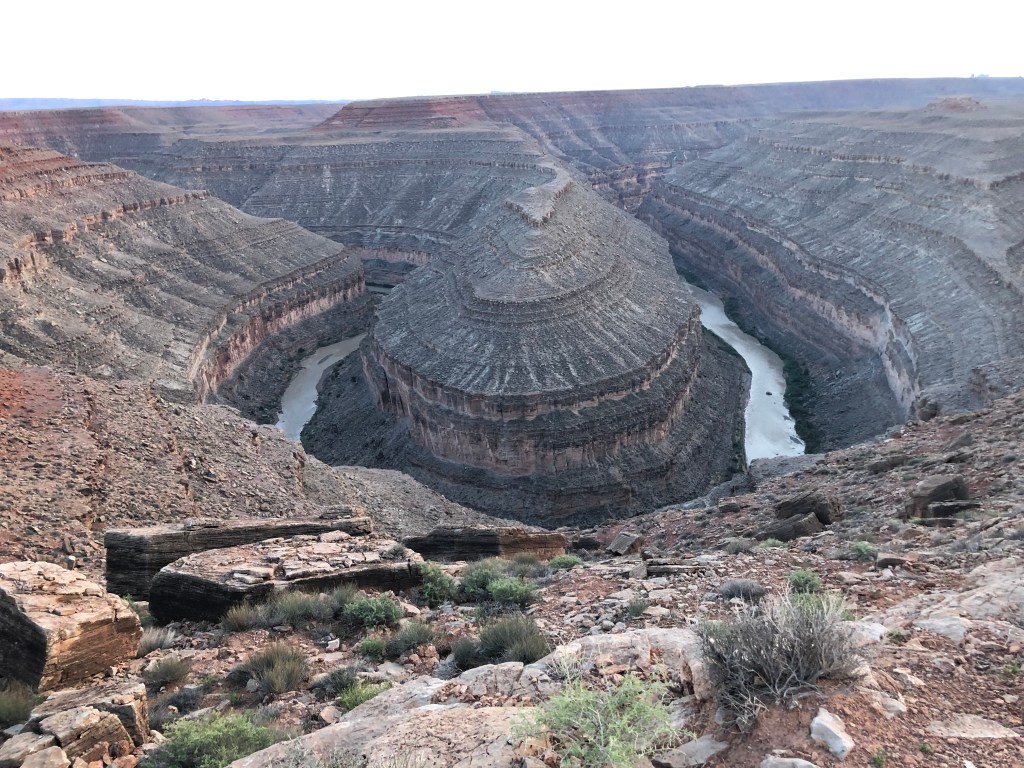
Seeing that Valley of the gods was out of the question for camping, we went down the road 9 miles to Goosenecks State Park. It is situated on Dine (Navajo) land and overlooks the San Juan River as it flows like a snake far below. It is a popular campsite with beautiful views of the sloped cliffs to the river.
This whole area of the west is characterised by plateaus, bluffs, mountains, valleys, canyons, dirt, rock and sand. The rock cliffs that can be seen at Goosenecks along hwy 163 have layers of color that is reminiscent of sand art. We must have hit the rainy season as thunderstorms moved in on us while we spent our time in the area. A frightful display of the power of God in the lightning show – Doug doesn’t think it’s frightening; he loves a good storm!
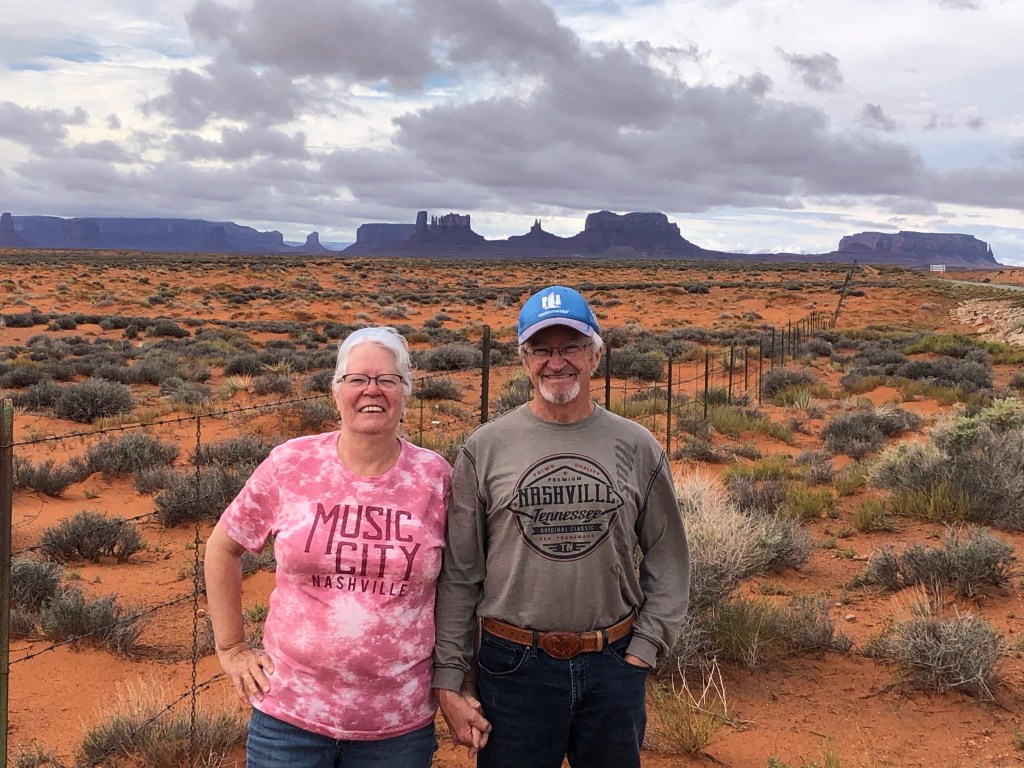
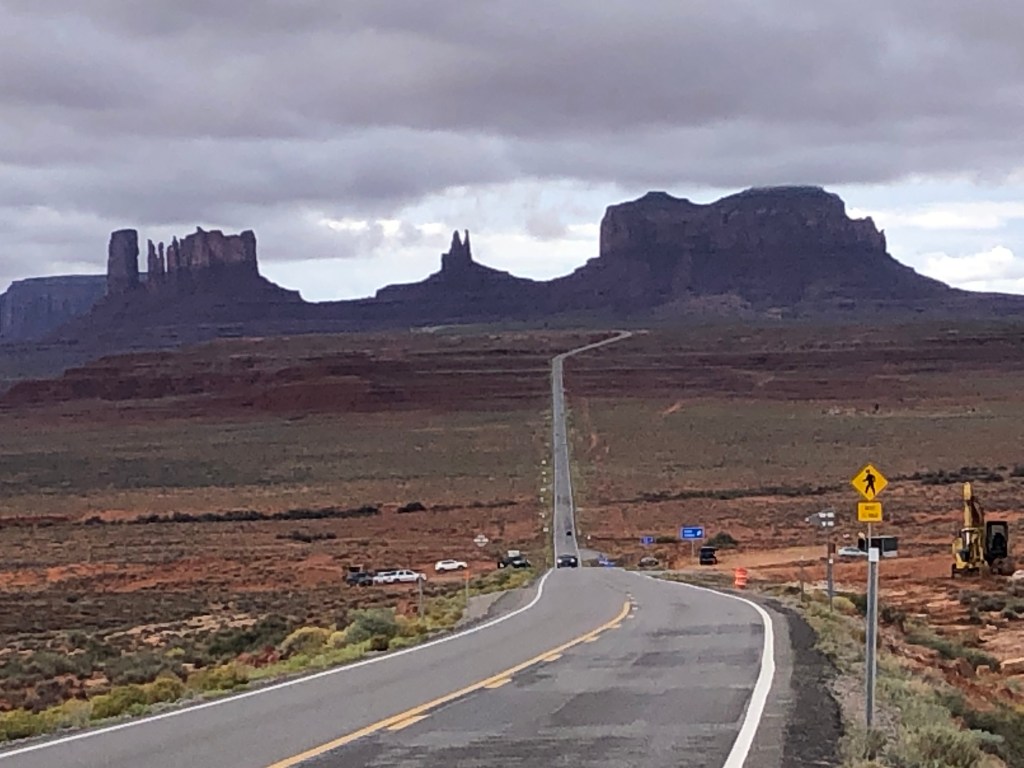
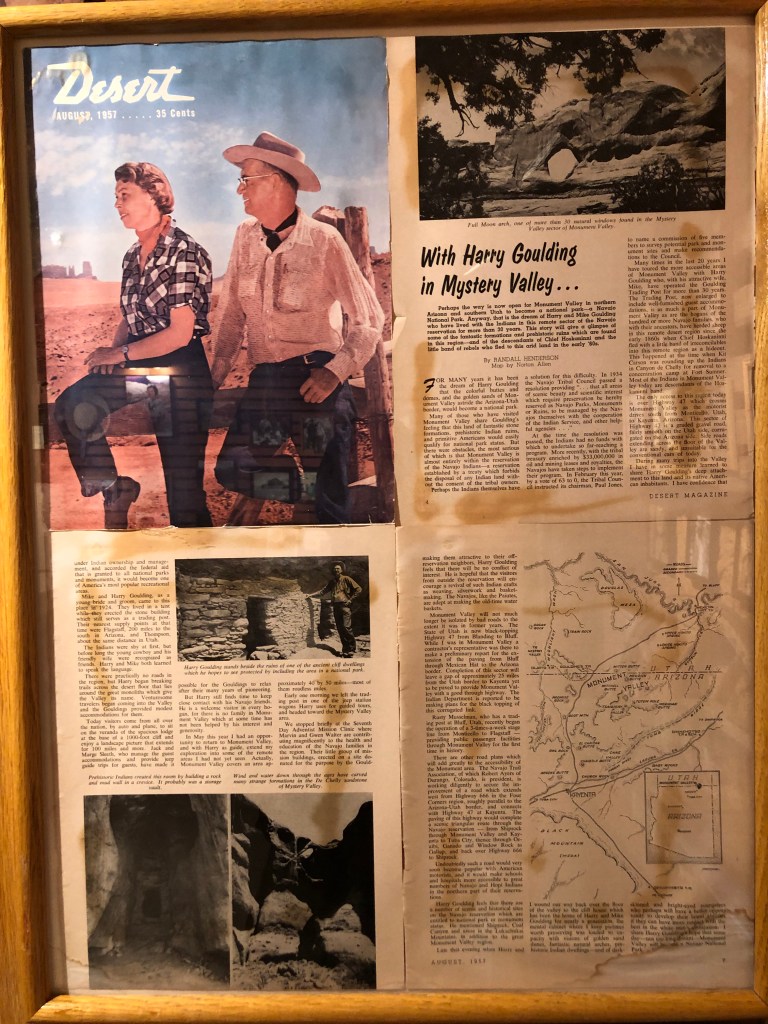
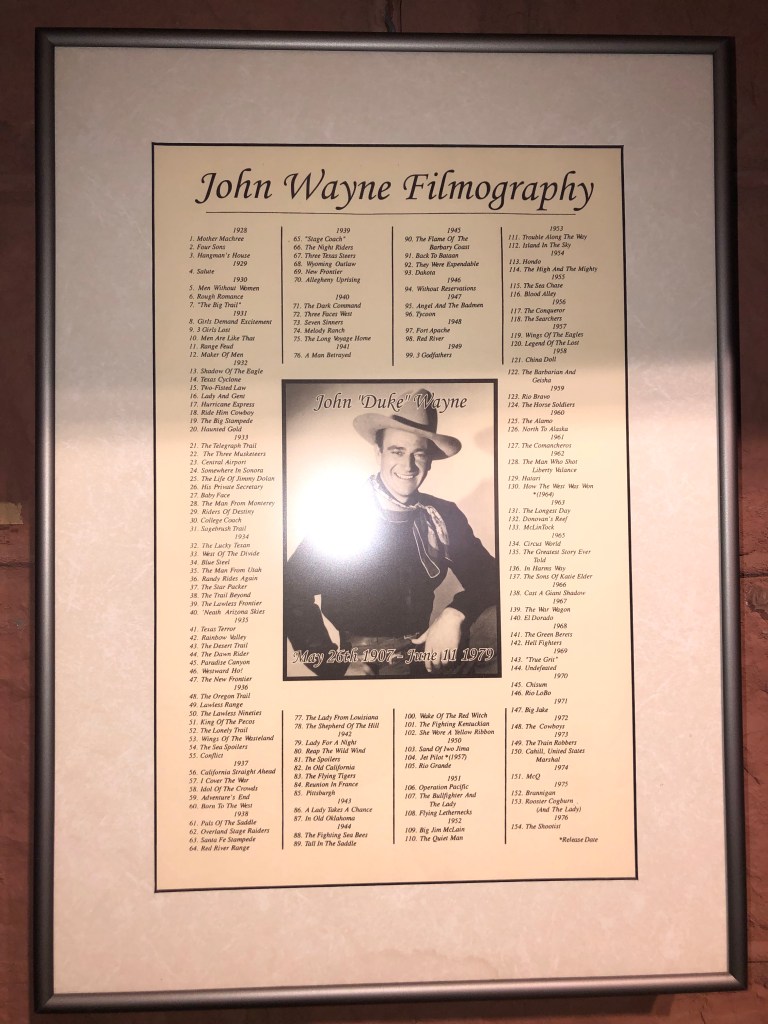
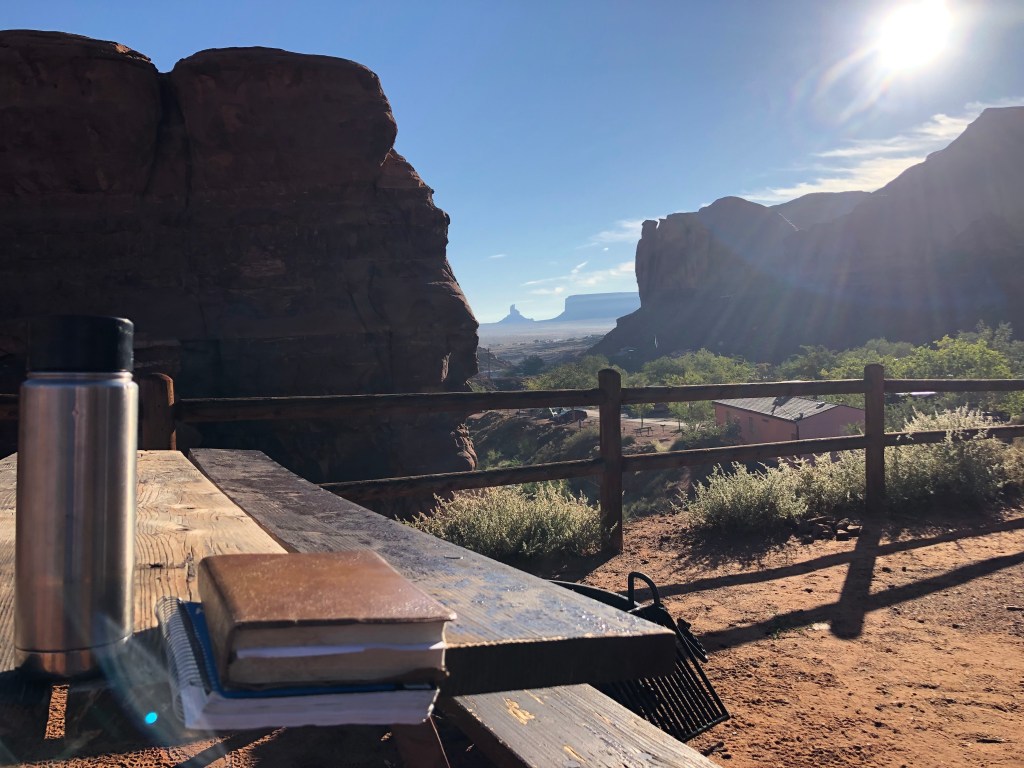
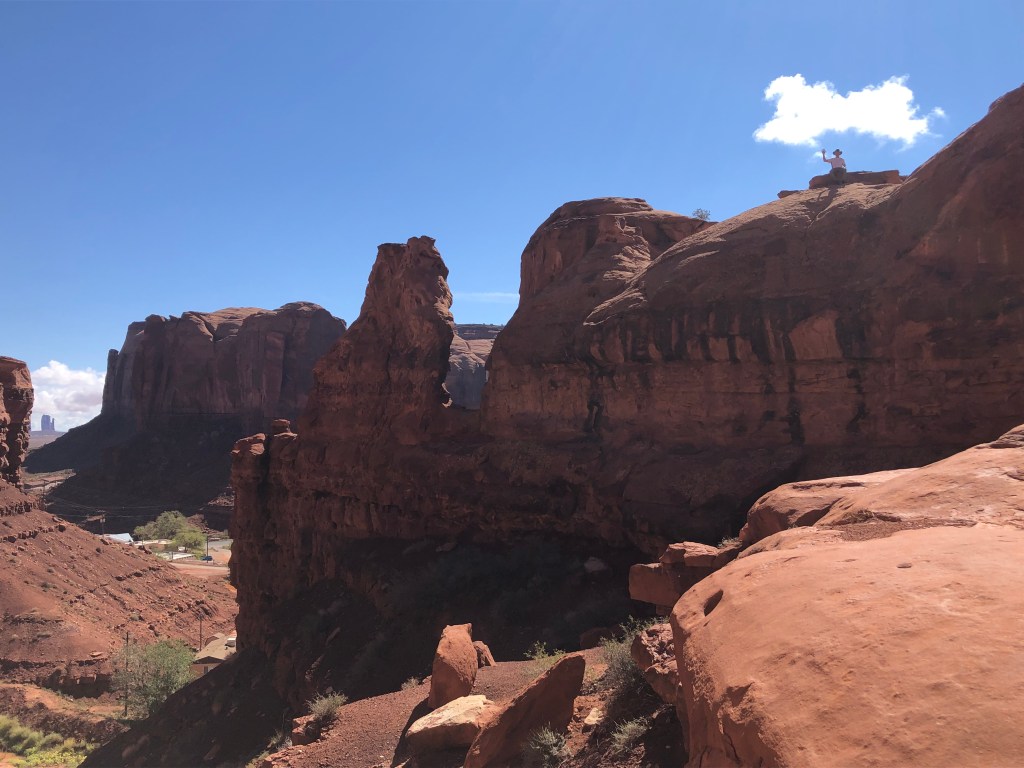
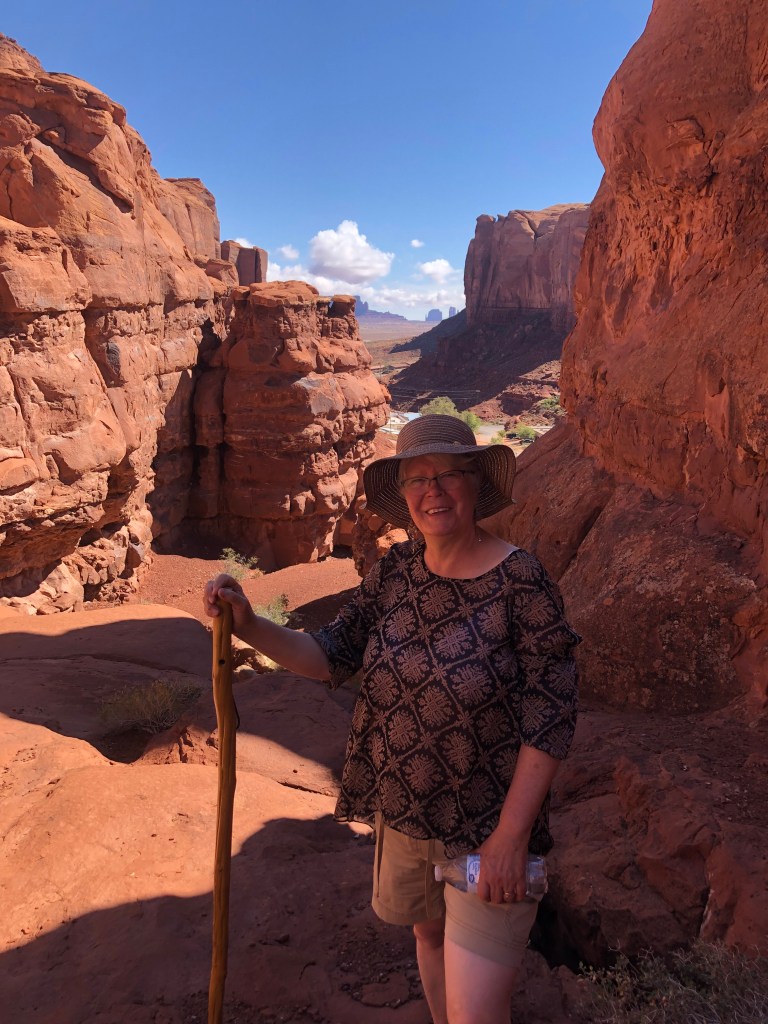
It was great to visit Monument Valley again with its iconic views of rock formations. We camped at Gouldings Campground. Harry and Leone (Mike as Harry called her) purchased a vast tract of land in the Valley in the 1920’s after the Paiute relocated from their reservation in Monument Valley. After many years of living and working in tents they set up a permanent trading post (which was their home) for the native Navajo peoples that lived there. The Gouldings were very instrumental in their livelihoods, caring for the native people. In the 1930’s, when the depression hit, the Navajo people suffered. Harry heard that Hollywood was looking for new places to film movies. With very little money in his pocket he travelled to California and persuaded producer John Ford to check out Monument Valley. The rest is history. John Wayne movies (directed by Ford) were produced there, as well as countless others over the years.
Speaking of John Wayne movies, if you watch those filmed in Monument Valley, you will notice that the scenery is all the same – probably at different sites throughout – as wagon trains or cowboys travel miles across the desert! As a result of Harry Goulding’s advocacy Monument Valley has become a worldwide destination and greatly has helped the Navajo people. In 1962, when Harry became ill, the Gouldings gifted their stake to Knox College in Illinois. In 1981 it was bought by the LaFont family. Gouldings’ interests include a motel, a lodge, cabins, restaurant, gift shop, campground, grocery store, laundromat, and guided tours. It is all attended to by the Navajo people now. Although they are gainfully employed it seems they still have a harsh existence. There doesn’t seem to be much opulence there considering the vast amounts of world travellers that stop by.
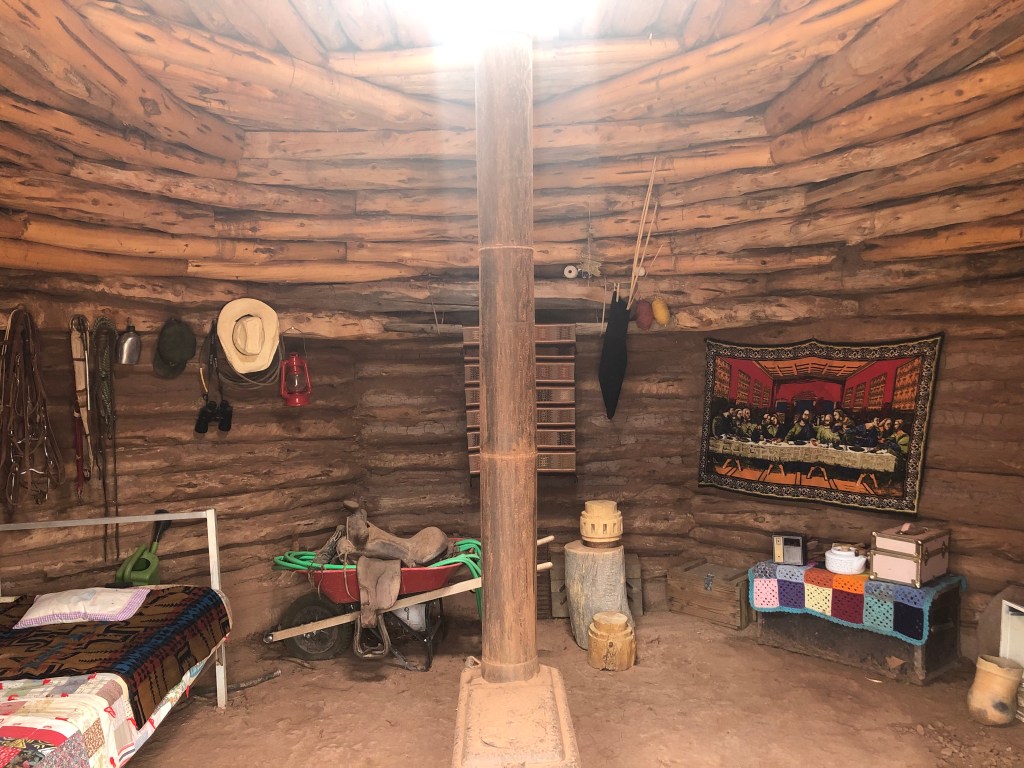
The Navajo people are very artistic. Their wares are quite beautiful and expensive. After a hike we went for a bike around the valley. The traditional house of the Navajo is the Hogan. It is a one room round structure built with logs and covered in mud. In the centre is a wood stove and around the roof around the stove pipe is open. The woman of the house would get her husband off to work and her children off to school and spend the day weaving and dying wool for the weaving. The dye is made from the many different plants around the area.
Sandra and Danny headed to the Grand Canyon while we headed south-east. We were there 4 years ago so went to eastern Arizona this time. Again we noticed the poverty of the native people – living conditions as harsh as their environment. It is open range country with cattle guards at the entrance of every driveway and side road (not sure why). We didn’t see much for livestock. Mask mandates are alive and well here. The Navajo nation took quite a hit with Covid.
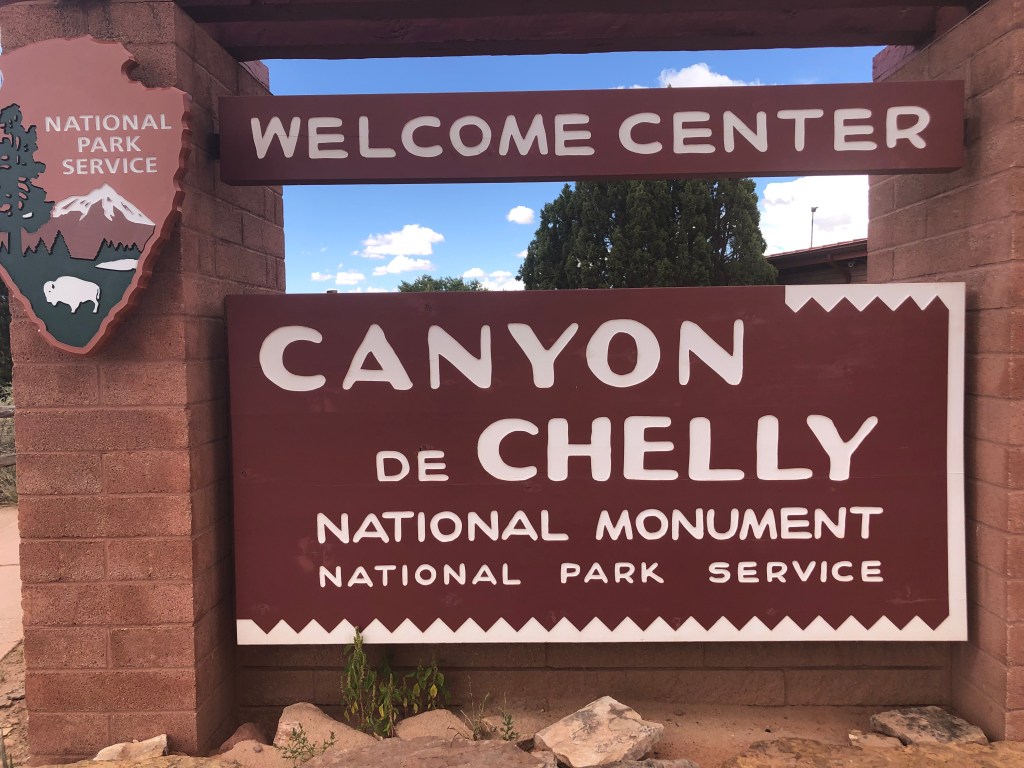
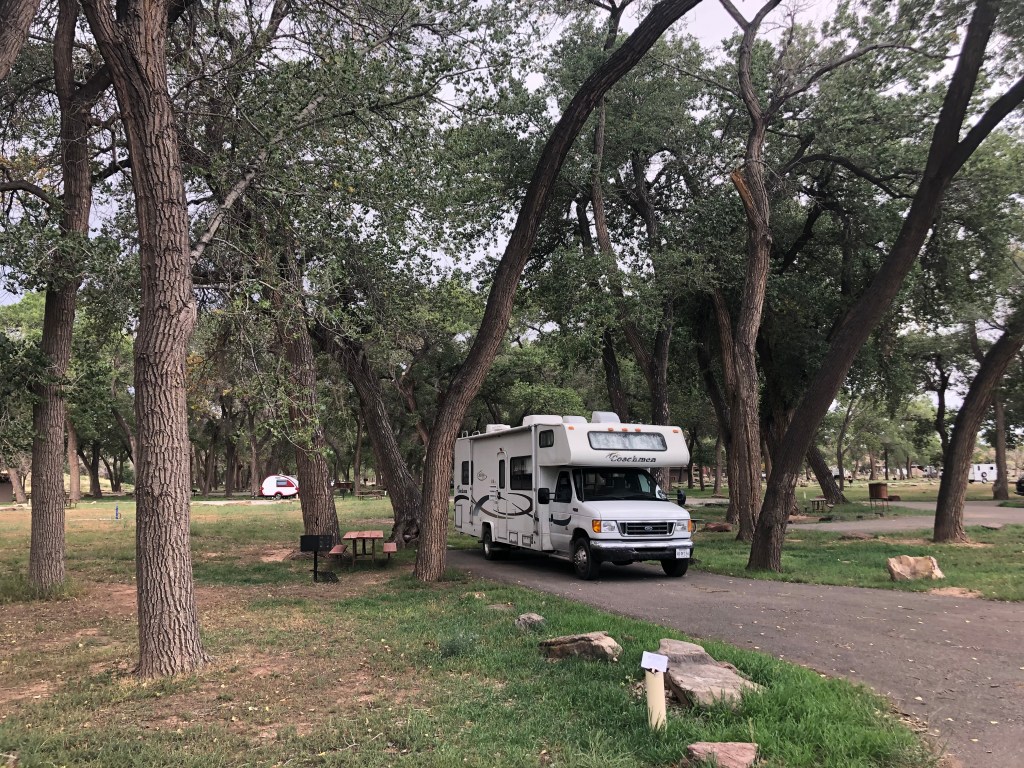
We arrived at our campground just inside Canyon De Chelly National Monument mid afternoon, just before a thunderstorm descended on us. The campground is serenely situated among pine trees. Four homeless dogs roam about looking for a morsel. Before we left the next morning, I wanted to give them something, but I couldn’t find them. We drove the south rim of the canyon. The canyon and lands surrounding it belong to the Navajo people. They are very much connected to the land, deriving meaning, culture, and spirituality from their physical surroundings. History is passed on through stories, teachings, and songs. And it is a long arduous, troubled history. Conflict among the Navajo, other tribes and Spanish colonists ended a peaceful existence in the late 1700’s. in 1863 Kit Carson launched a brutal campaign against the people that ended with “The Long Walk” – a forced 300 mile trek to Fort Sumner in New Mexico. Many died from thirst, hunger and fatigue. Incarceration at the fort was just as brutal with inadequate food and shelter and disease. In 1868 the US government allowed them to return to their home and rebuild their lives – rebuild because their homes and land were destroyed.
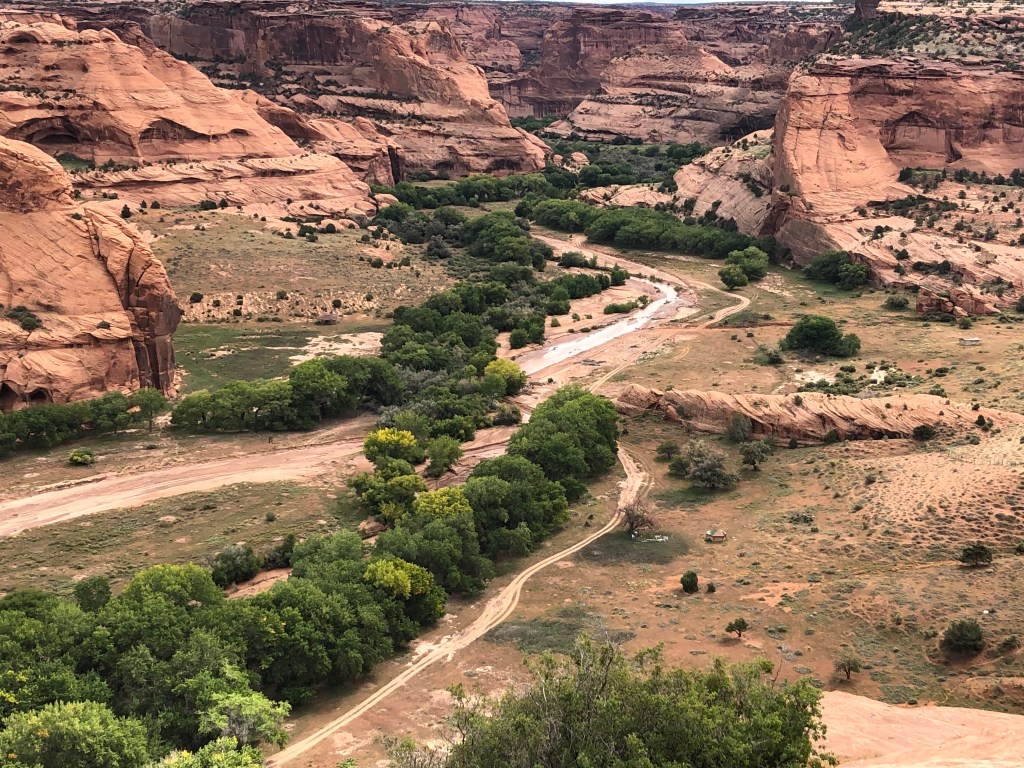
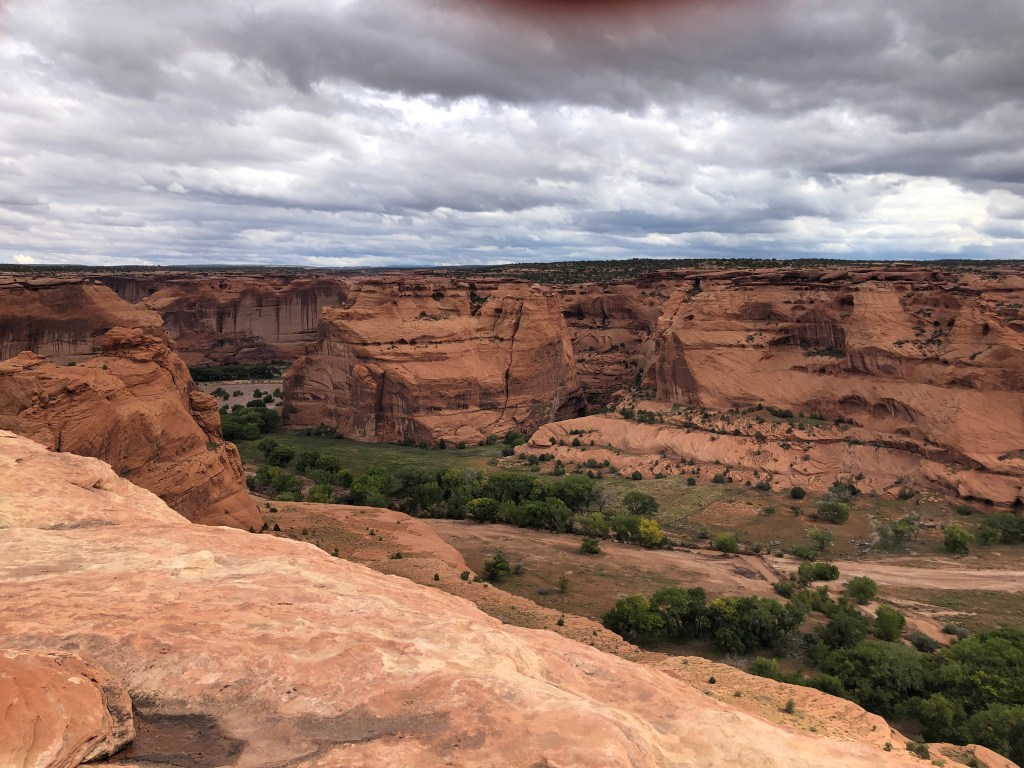
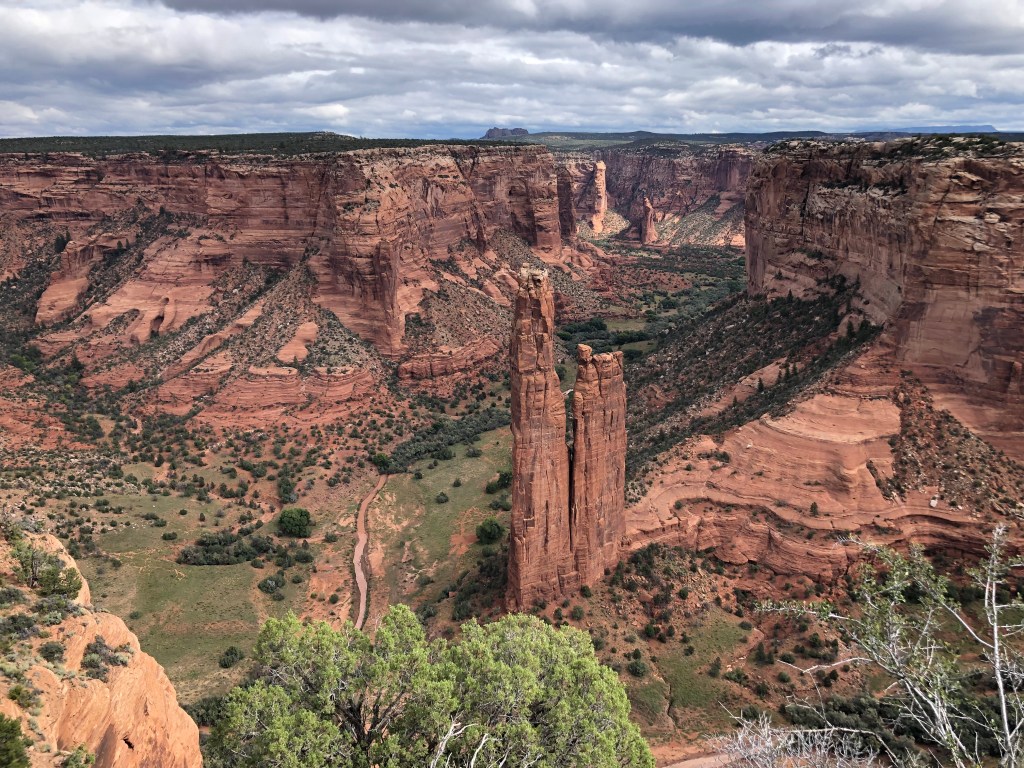
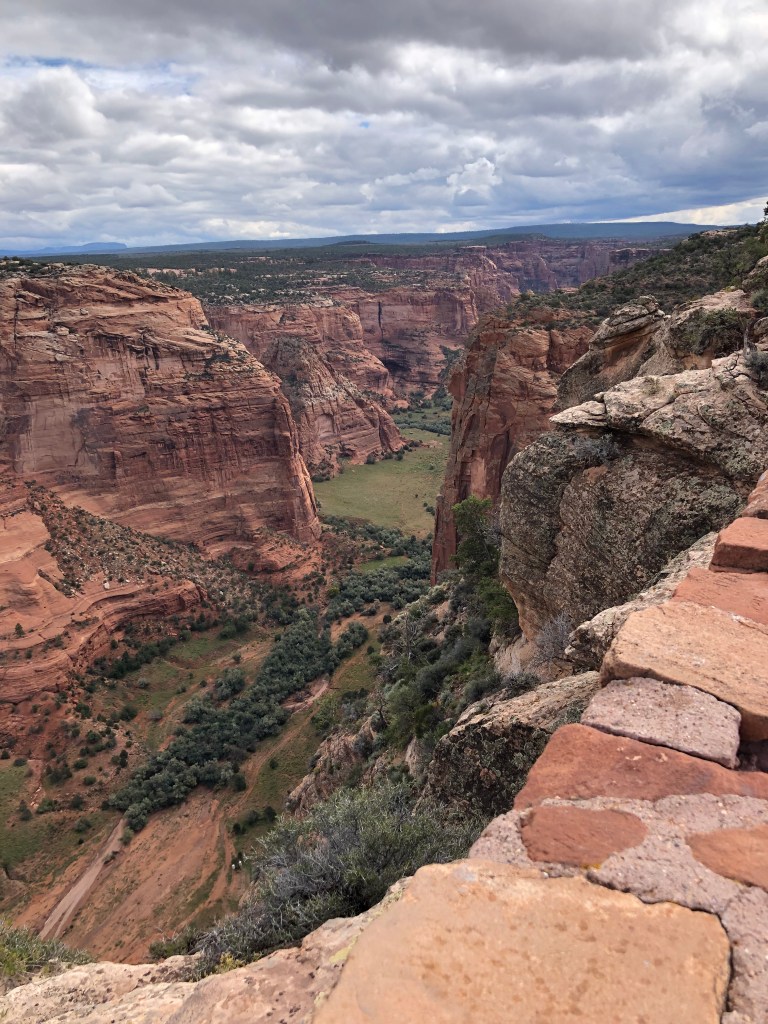
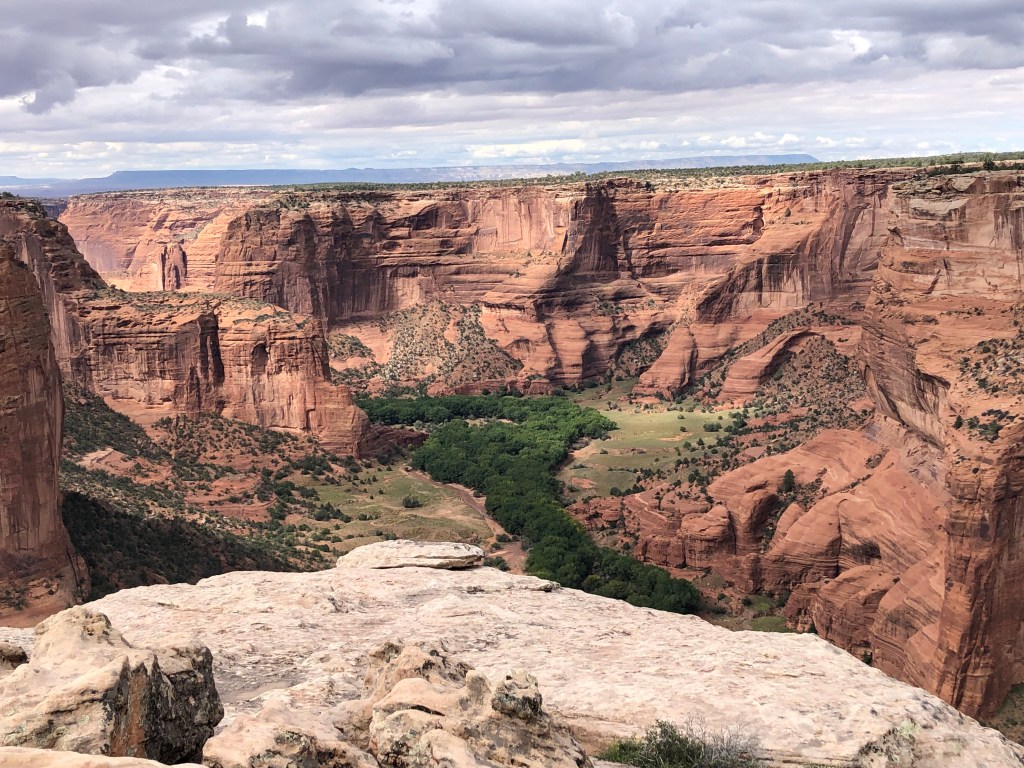
Canyon De Chelly is pronounced D’Shay. The Navajo name is Tsegi (SAY-ih). The canyon is 1000 ft deep with breath taking views. It is green and beautiful on the canyon floor with Chinle Wash running through it as a source of water. If you look at a map you will notice that Canyon De Chelly National Monument is made up of many canyons – branches deeply cut that spread like forked lightning. There are still a few hogans on the canyon floor, where natives grow alfalfa, corn, and small orchards. We met Antonio Carroll, a Navajo artist, as he sat painting in the back of his pickup. He told us some history that was passed down from his grandmother. His English wasn’t very clear, so we didn’t catch everything. The Mayans and Azteks influenced their way of life. He mentioned the Anasazi people. His grandma said “Anasazi” means enemy. But they weren’t the enemy, so she referred to them as “Asazi”, which means friend, because they helped her ancestors.
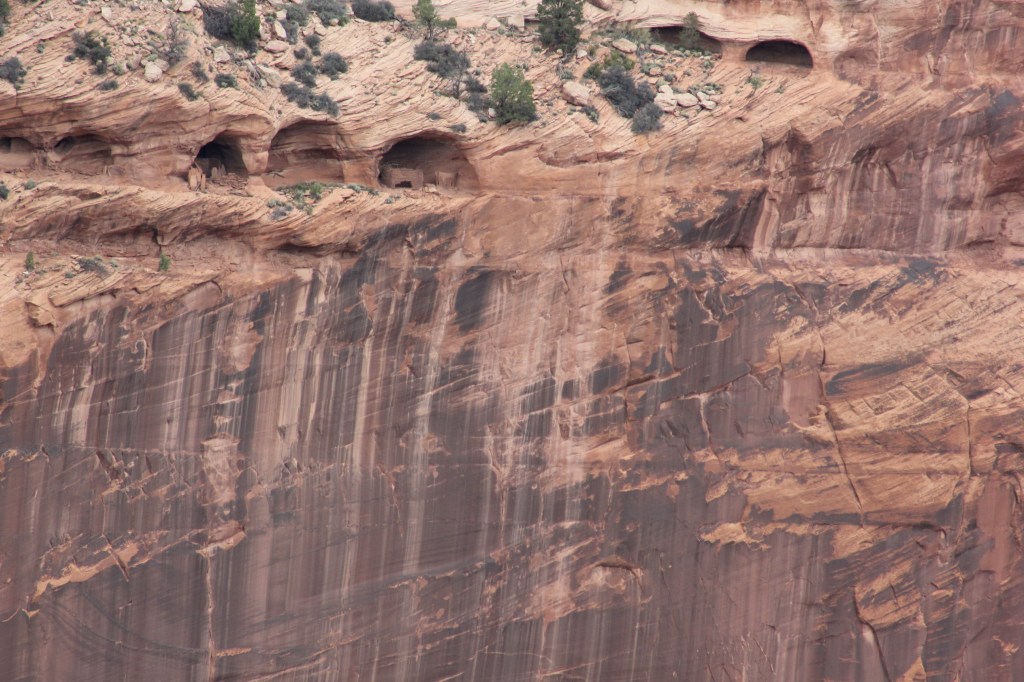
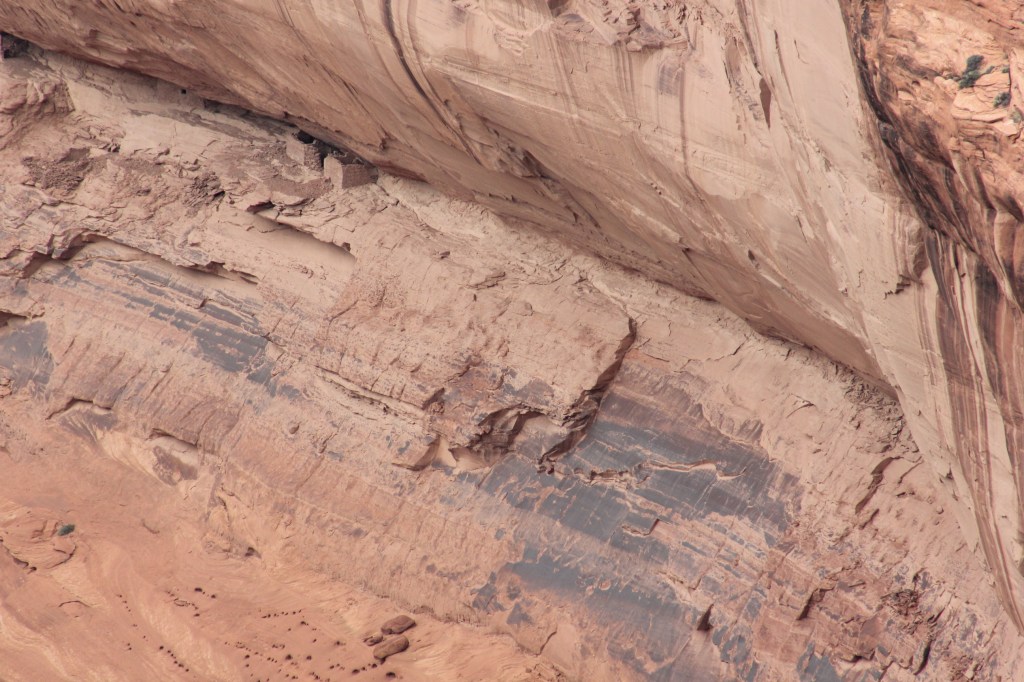
There are Asazi ruins throughout the canyon, perched on and in the cliffs, evidence of their existence in the 1200’s. If you zoom in on a couple of our pictures you can see the ruins. How they navigated to get to their dwellings is a mystery to us. For some unknown reason they disappeared. We read that the Hopi are descendants of the Asazis. Antonio said he found artifacts when he was a boy while planting corn. He and many Navajo will not take the name “Navajo” (given by Spanish) preferring the name “Dine” (pronounced Dineh). We purchased 2 of his paintings. Down the road we met Leon Thomas (who happened to be Antonio’s cousin). He also is an artist – pictures etched in sandstone, which he carved with a half pair of children’s scissors. After departing the canyon, I was sorry I only purchased one etching. We prefer to buy directly from the artist because we know the money goes to the artist.
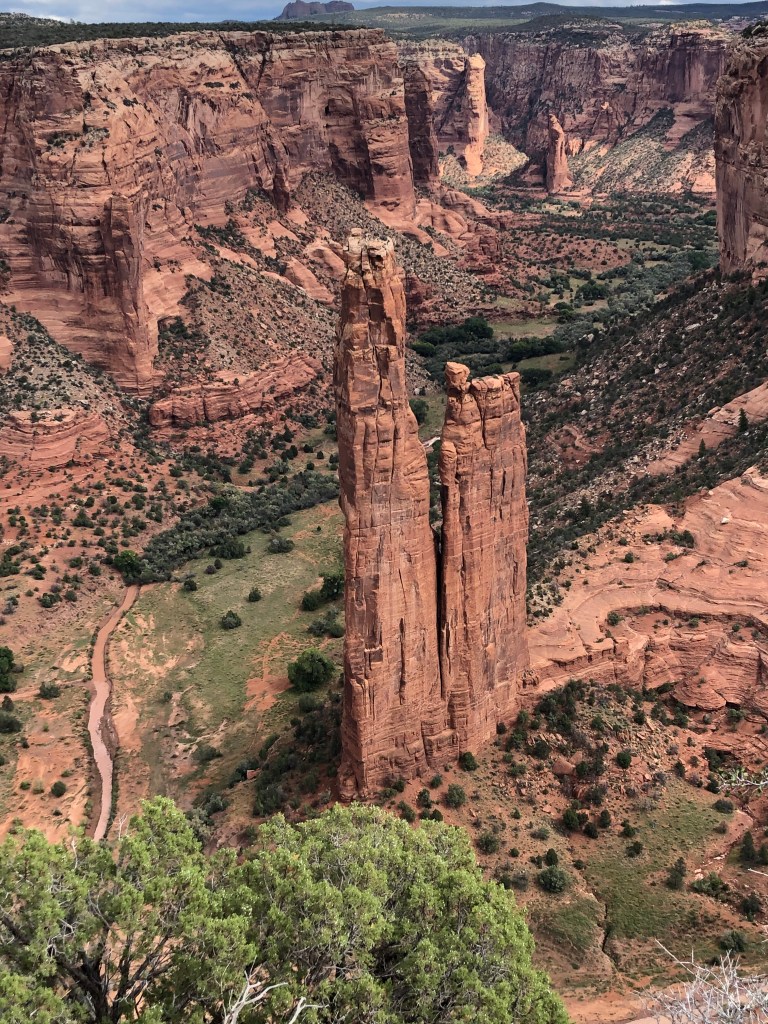
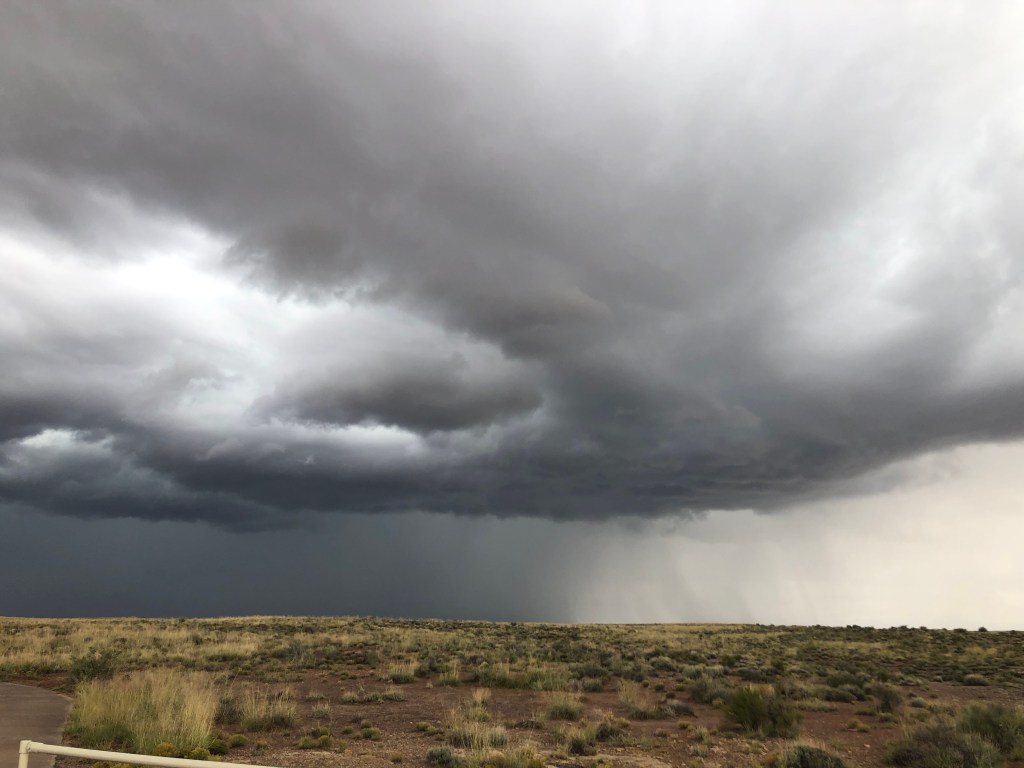
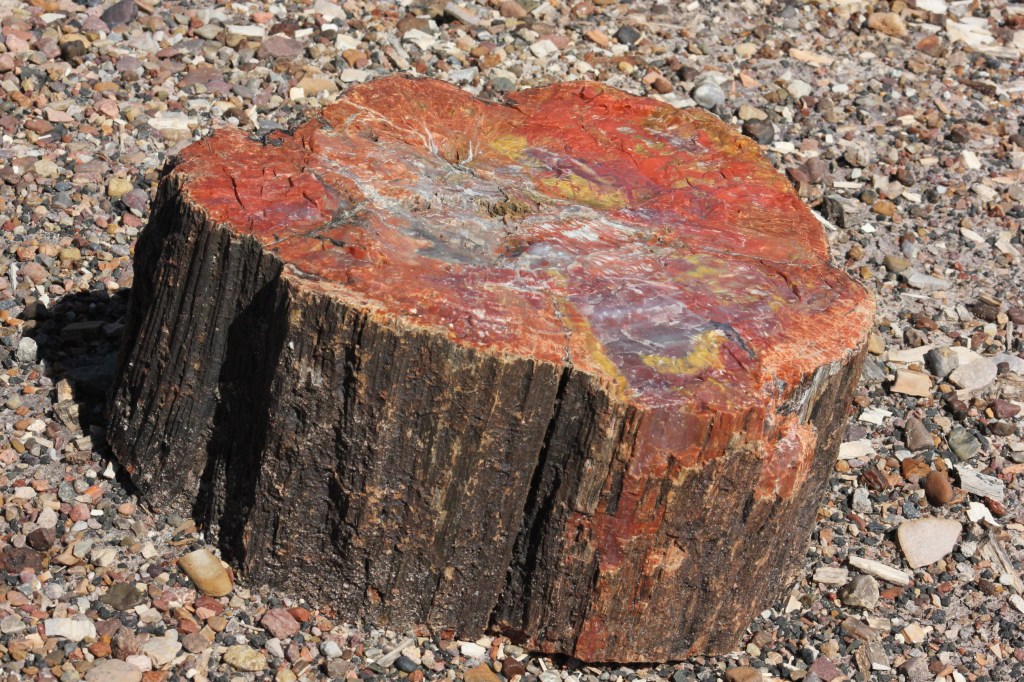
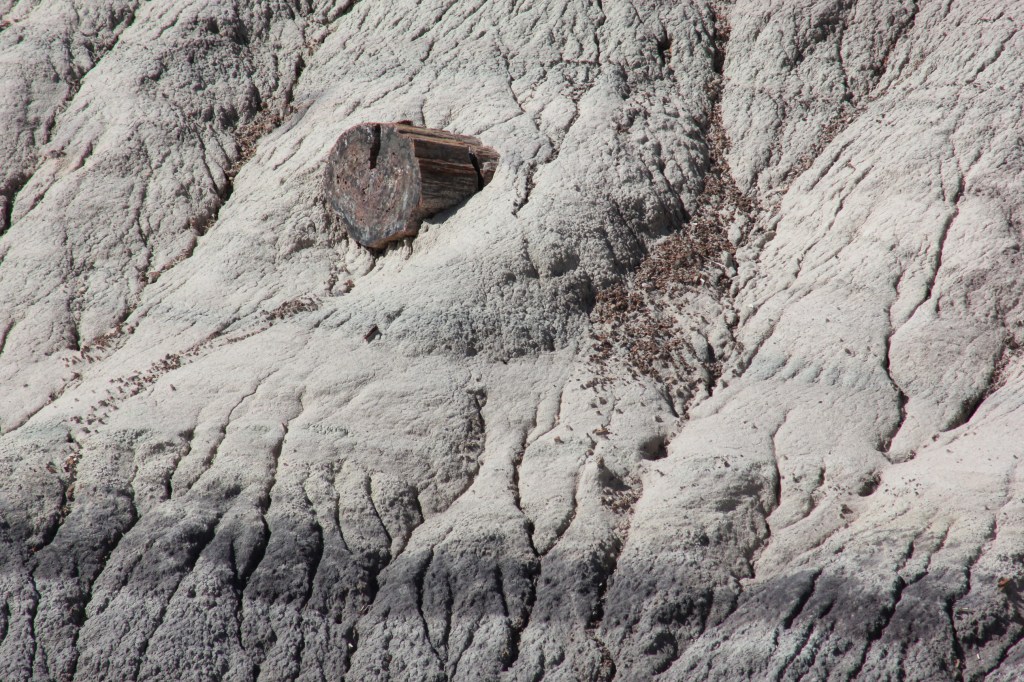
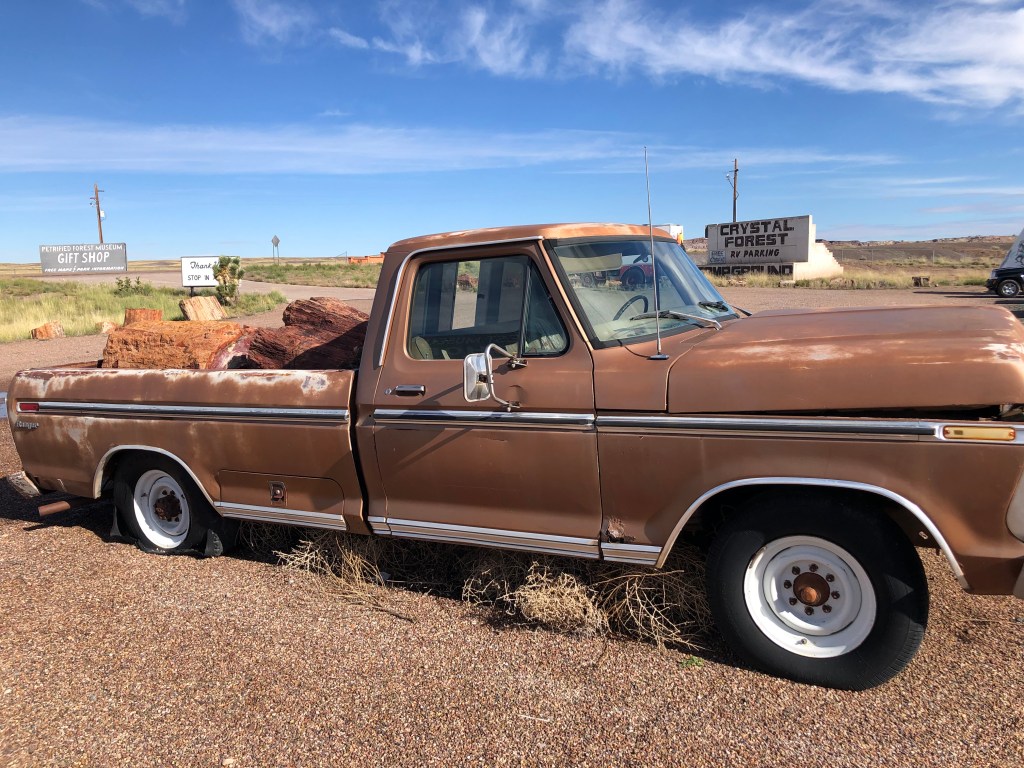
We greatly enjoyed Canyon De Chelly and its marvelous scenery, especially Spyder Rock, an 800-foot spire rising out of the canyon floor. We think the park was among the greatest sights on our trip. Later that day we drove to the Painted Desert and the Petrified National Park. A big storm was brewing which limited pictures, but we did get to see some petrified wood, including one log sticking out of a mound, which means the wood came before the mound of dirt? Geology is so amazing. But you can’t beat a Ford truck trying and failing to haul a few tons of petrified wood!

 Let's Do The 180!