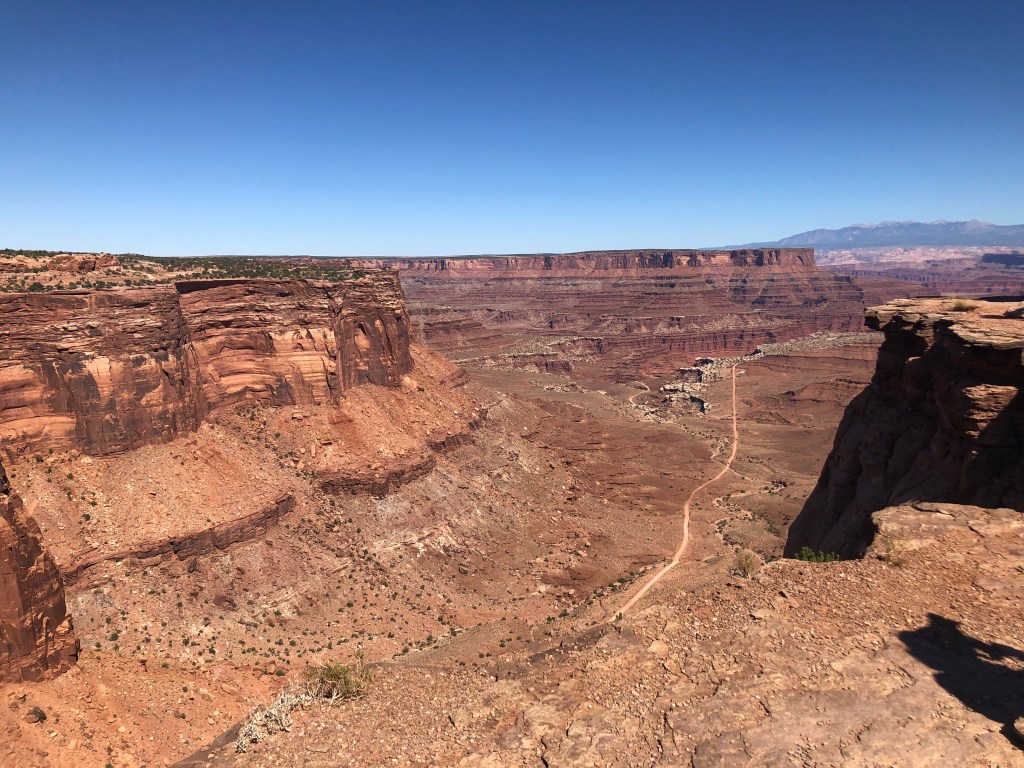
After a couple who are full time RVers asked for our campsite at Lone Mesa (apparently, they use that spot every year), we drove down the road to Canyonlands National Park. We originally planned to camp at Canyonlands, but the road to the campground was washed out and not passable. The desert is prone to flash floods and washouts when thunderstorms hit. The scenery at Canyonlands wasn’t a bit disappointing. Deep canyons upon deep canyons. Vast open space below mesas and plateaus.
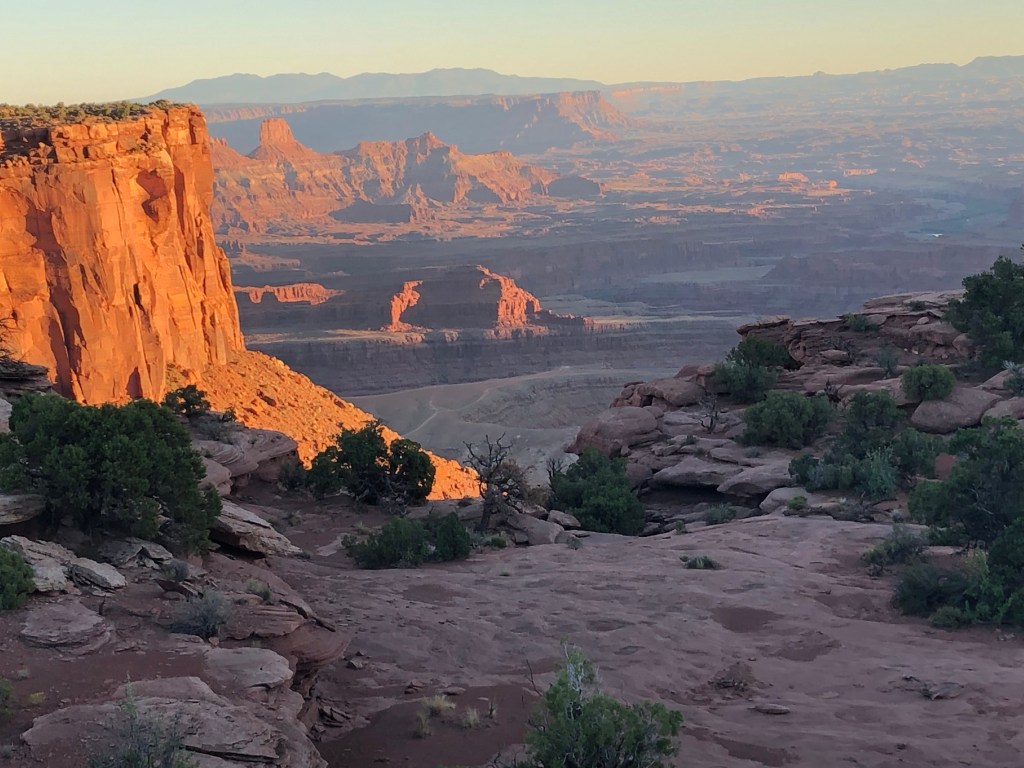
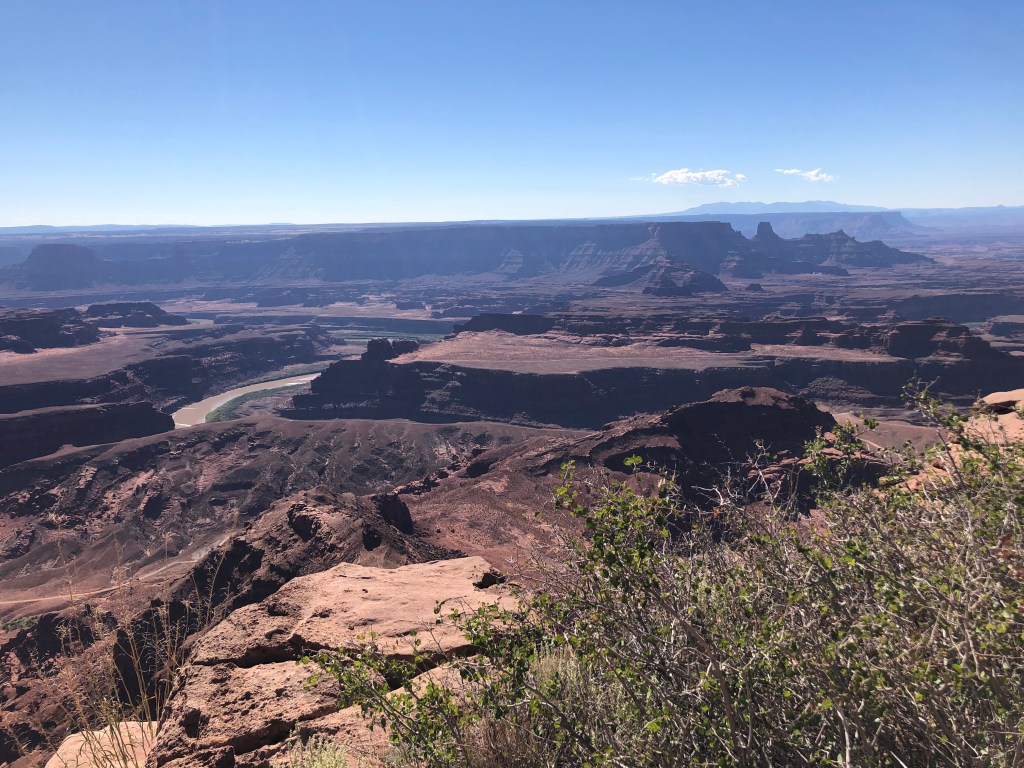
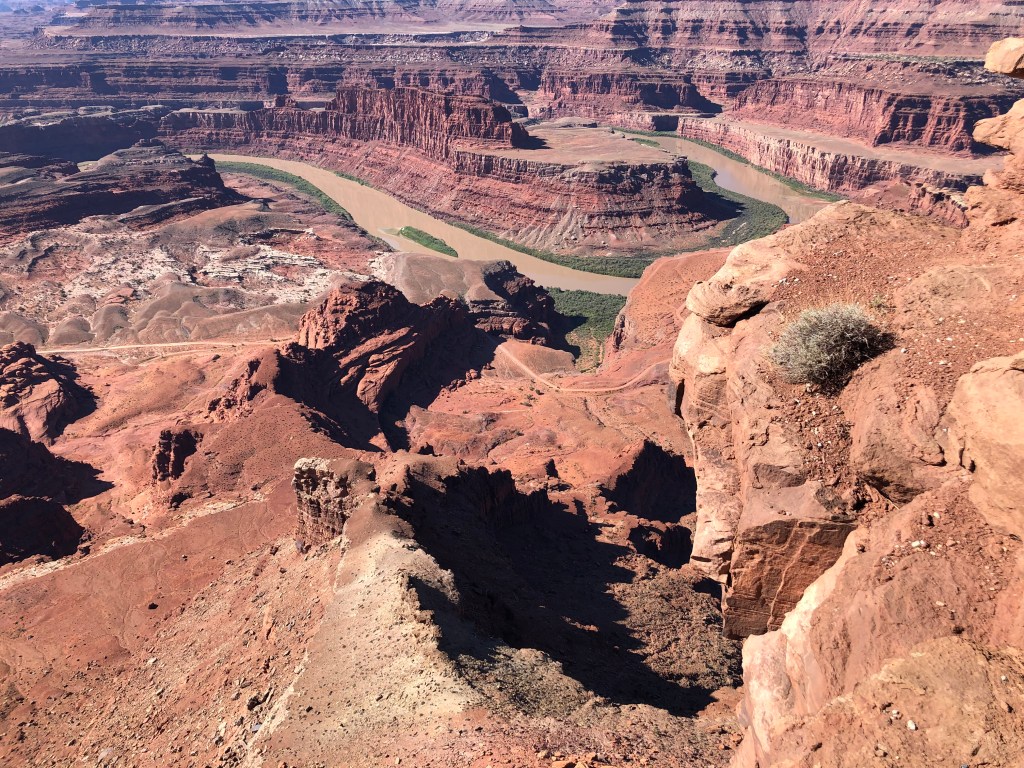
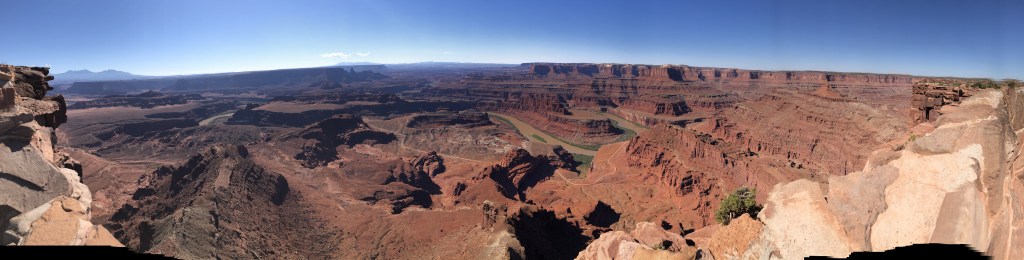
Dead Horse Point State Park is just over the canyon from Canyonlands. The park is aptly named for a tragic event. The end of the plateau, high above the canyon, is a spit of land with a narrow neck. At the turn of the last century cowboys corralled wild horses there and barricade them in with brush and such. Then they took the ones they wanted and left the rest barricaded for some unknown reason. The horses died of thirst. Not much can be said for those cowboys! The campground there is paved but had to hike to view the canyon. In the canyon 2000 feet below Dead Horse are solar evaporation pools used in the process of mining potash. The potash is used in the production of fertilizer. Also in the 1940’s and 1950’s uranium was mined there and used in the creation of weapons grade uranium during WWII and in nuclear reactors during the Cold War. Uranium is no longer mined there. For those with 4 wheeled vehicles who want extra adventure, there is a roadway through the bottom of the canyon.
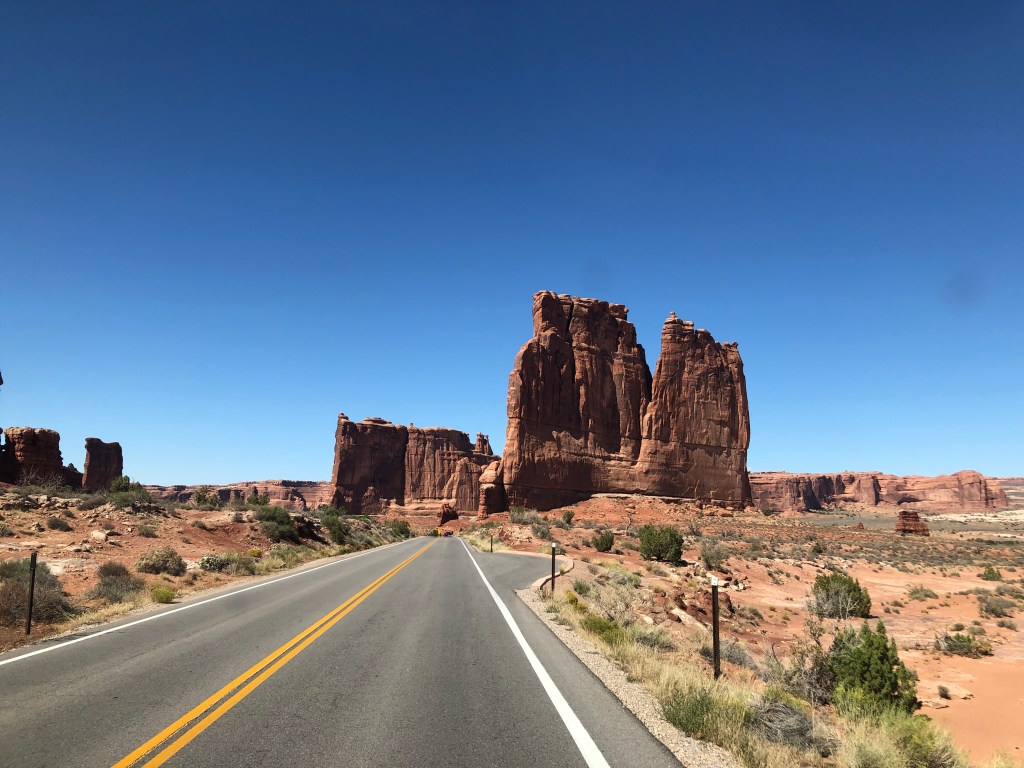
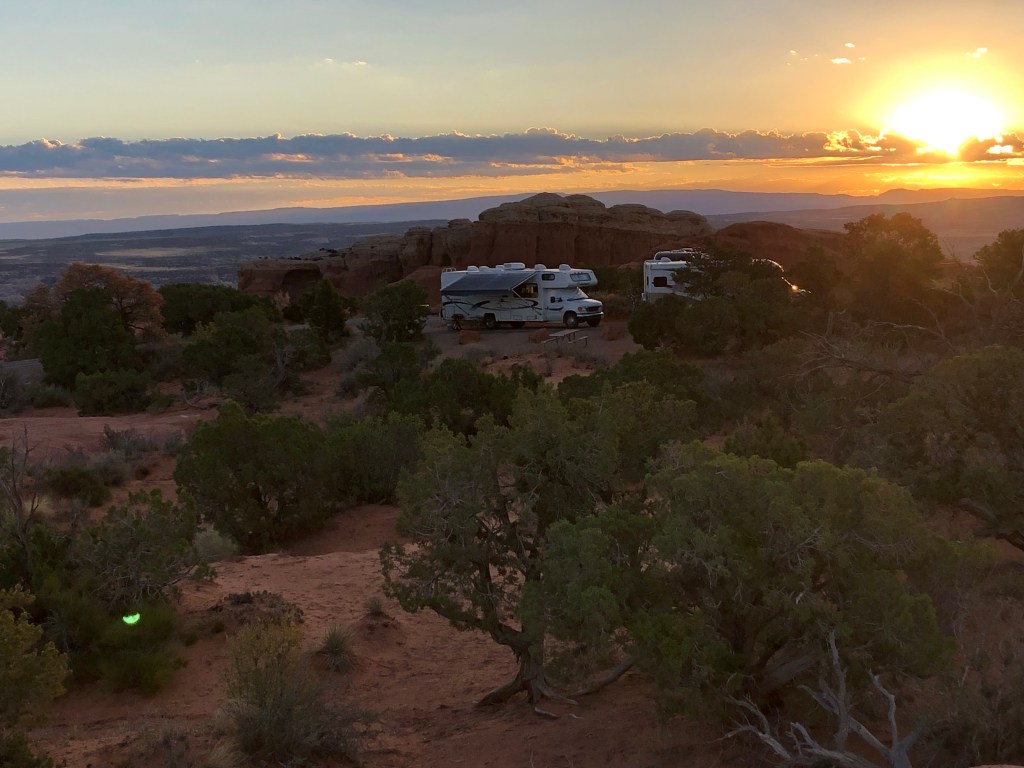
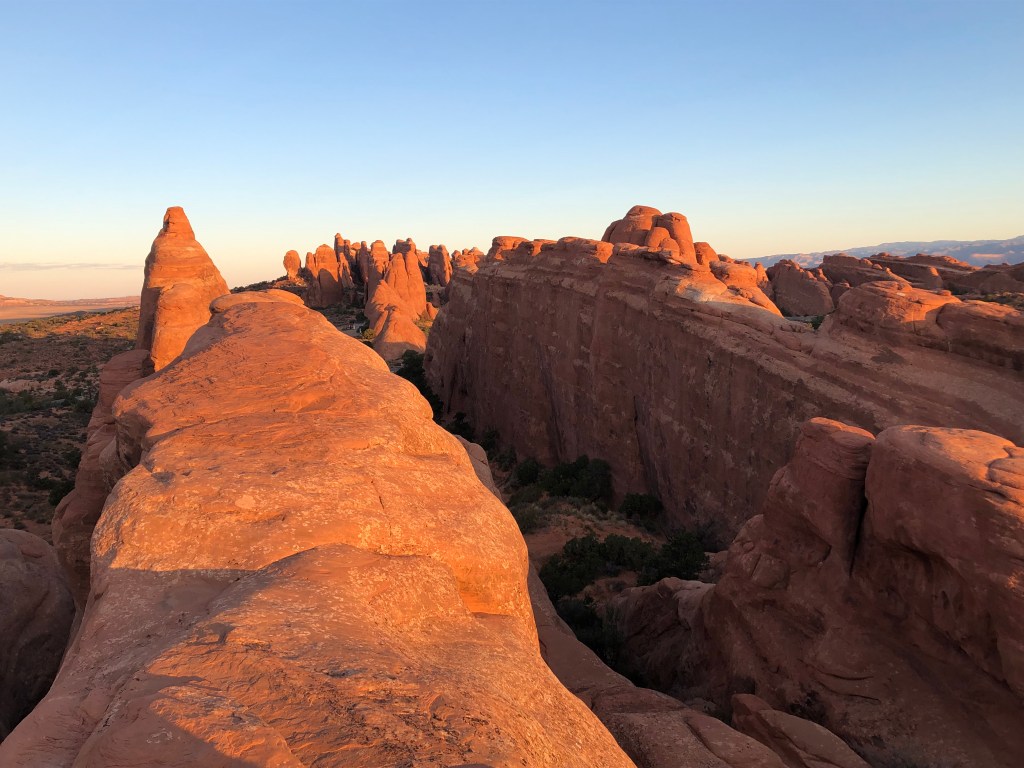
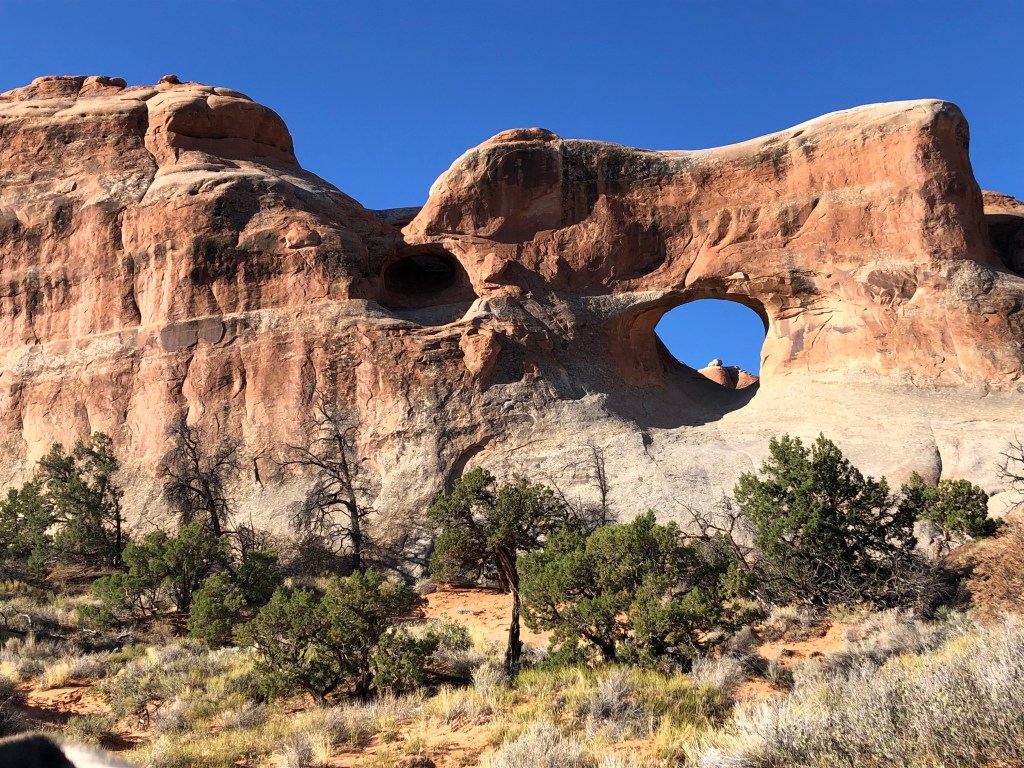
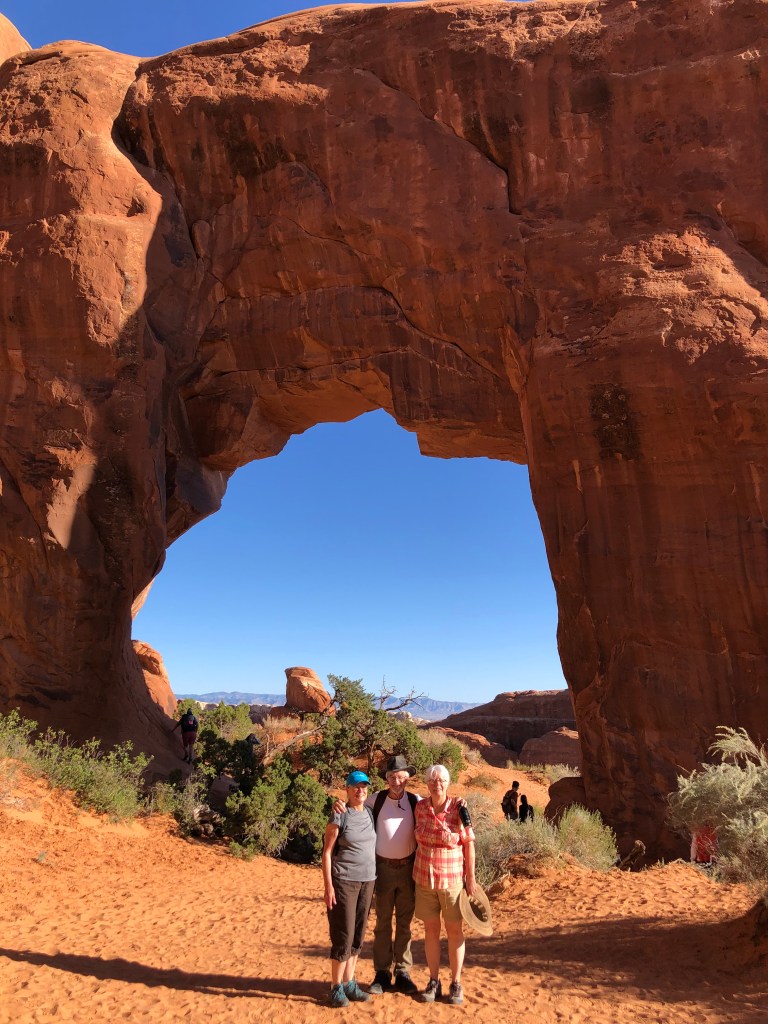
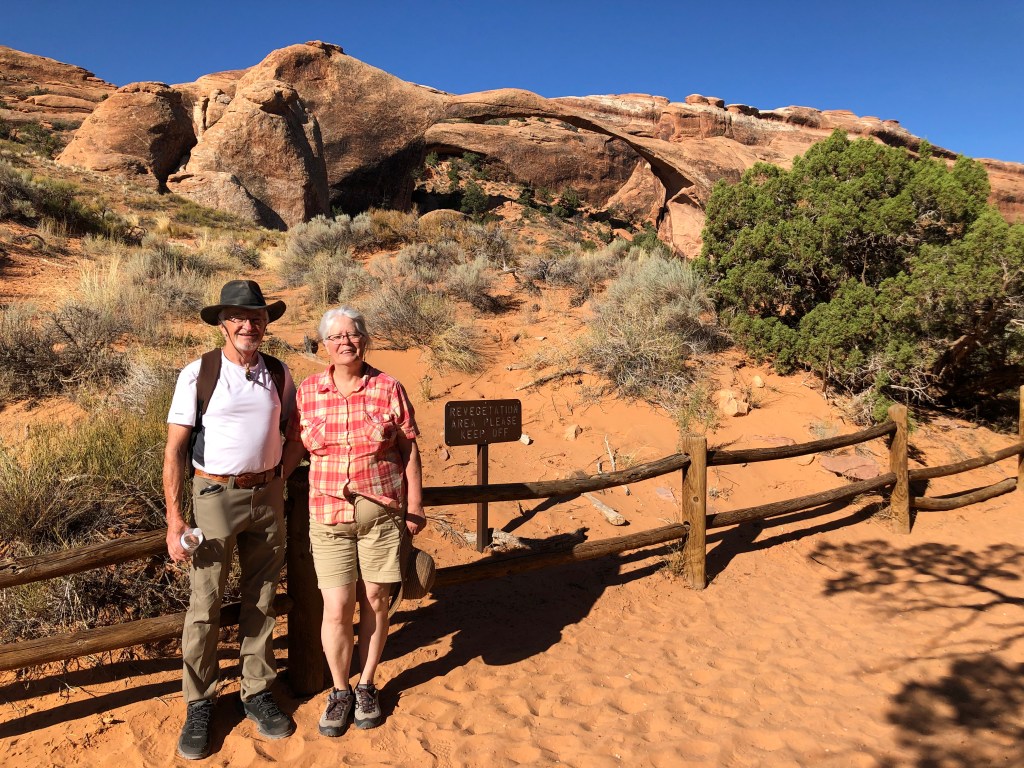
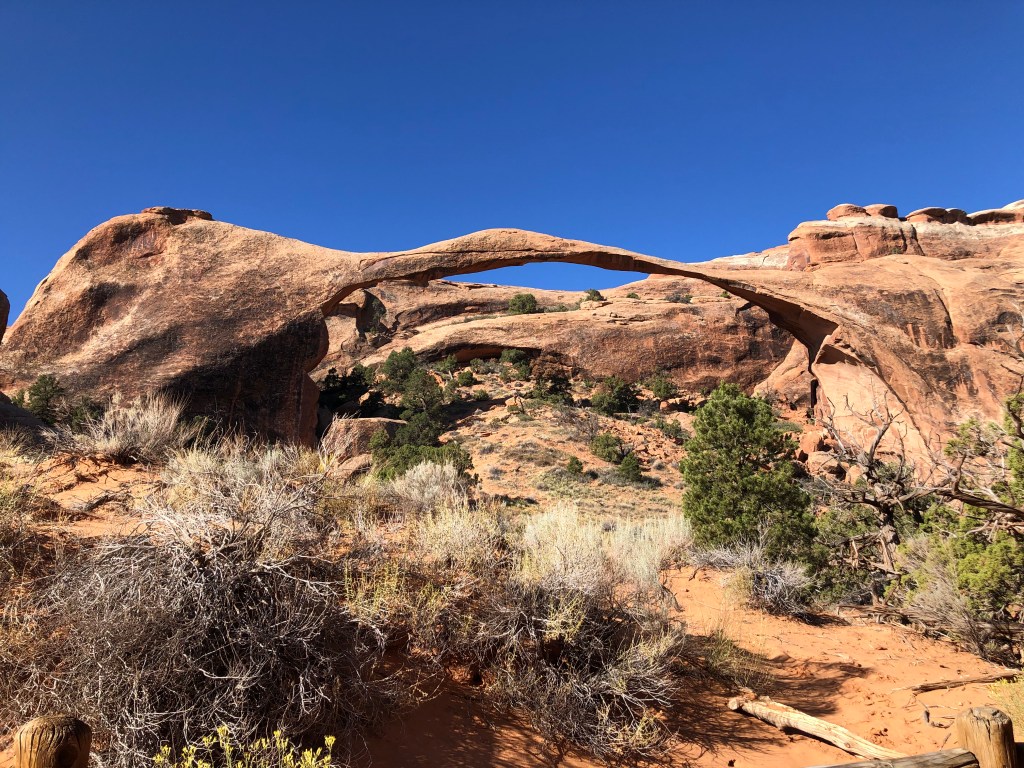
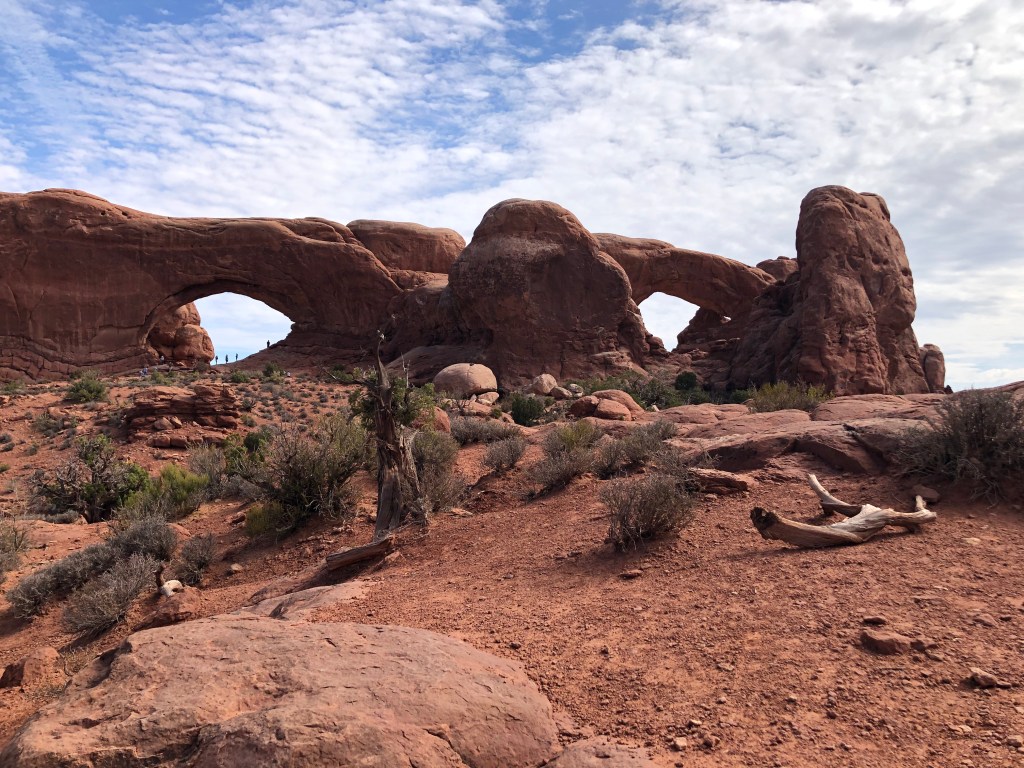
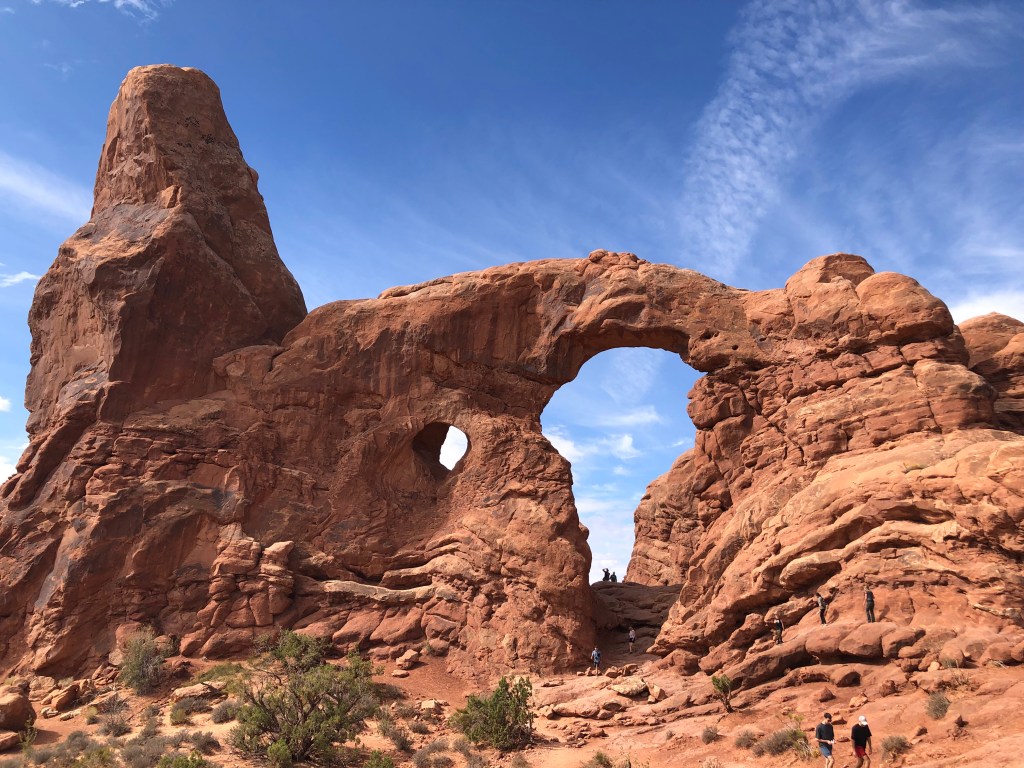
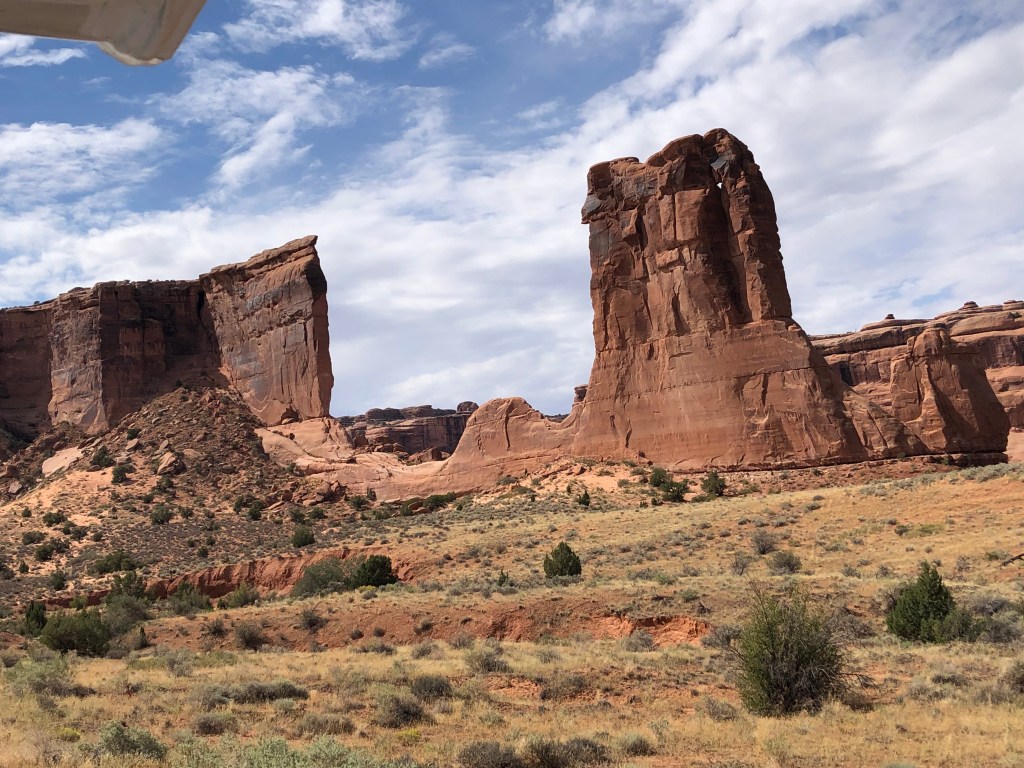
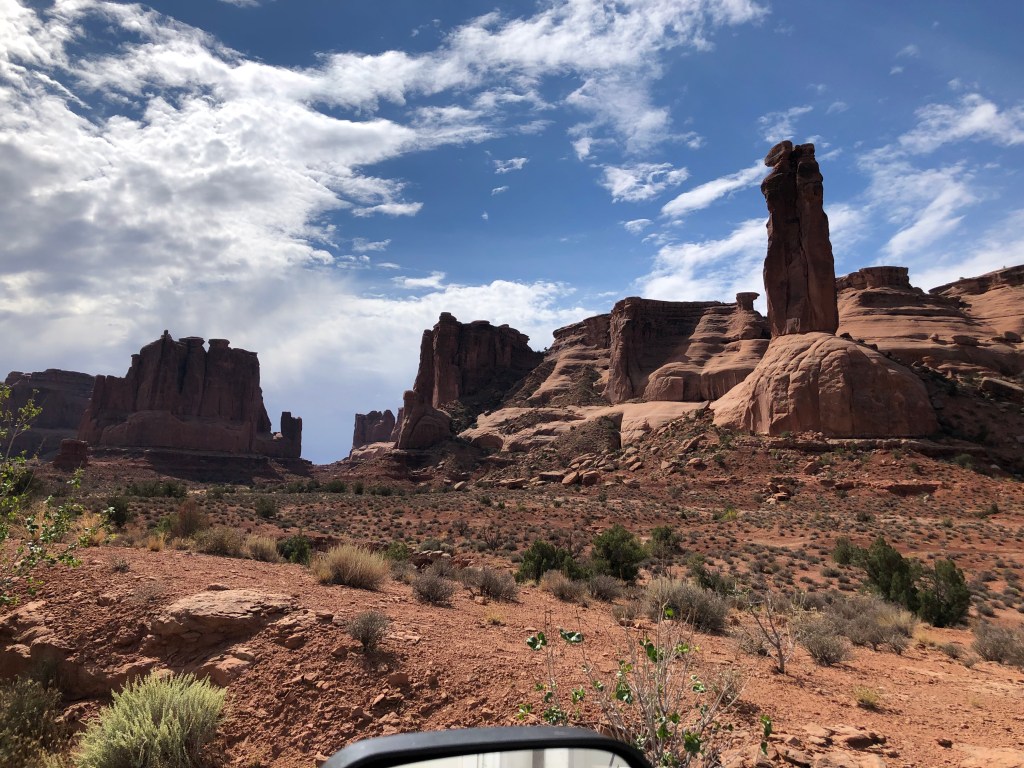
Arches National Park is in the close vicinity of Canyonlands and Dead Horse. The area is filthy rich with beauty that cannot be captured with a camera – physical presence is the only way to really appreciate and experience the artistic hand of God, Who is so gracious as to allow us to be enveloped in it! The view from our campsite at Arches is rock formations, canyons, and scrub brush. Its harshness has a glory of its own. It’s hard to imagine any animal could survive there, but they do. We saw birds, deer and a cute little chipmunk (I clandestinely slipped the chippy some nuts and water!) Arches is home to 2000+ documented arches carved in the stone and rock. The park has a timed entry system for hikers. Over the last 10 years visitation to the park has risen 66%, causing road congestion, facility overuse and overcrowded trails. Timed entry requires registration and spreads visitation evenly over the day. Daytime temperatures can reach as high as 110 F in the summer. The sun sets at around 8 PM in the high desert. We sat out and watched the night sky – even saw the Starlink satellite! The landscape at Arches reminds me of the scenery of early Star Trek shows. I always thought those sets were manmade, but they were real. My mind kept saying, “Beam me up, Scotty!”
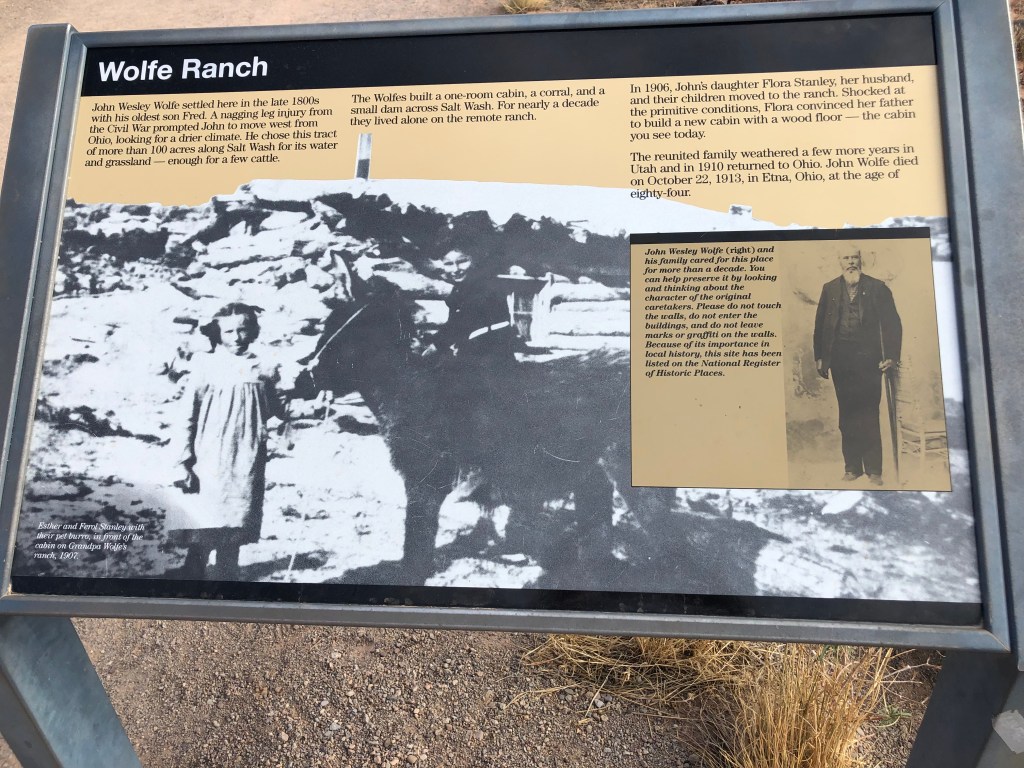
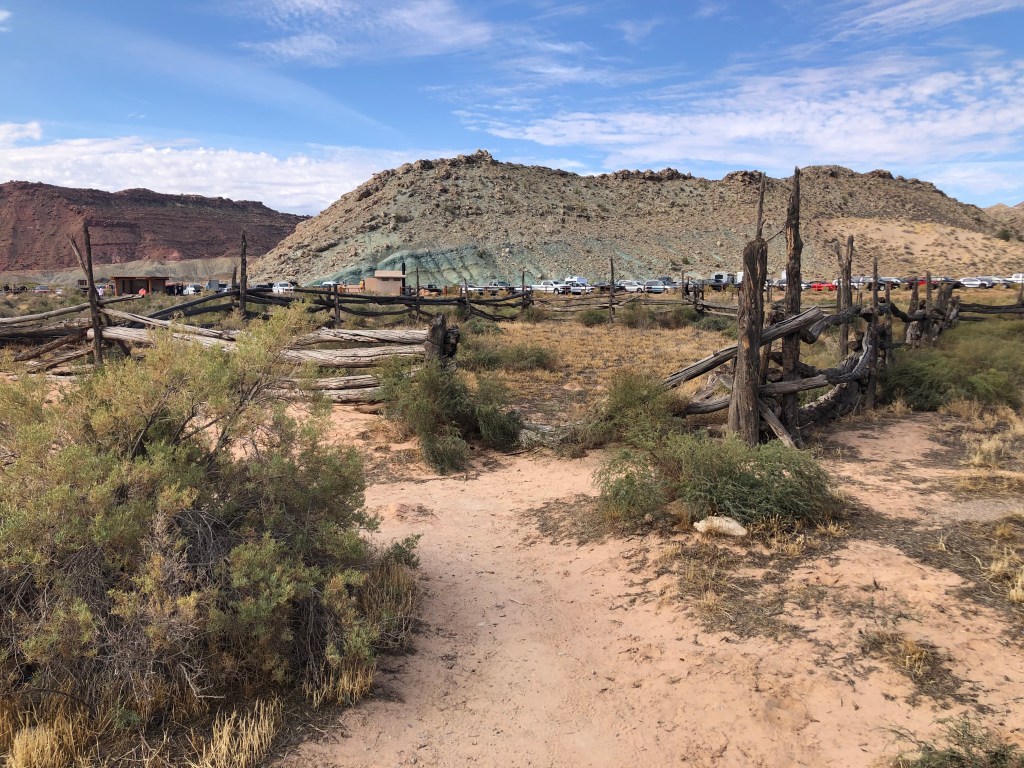
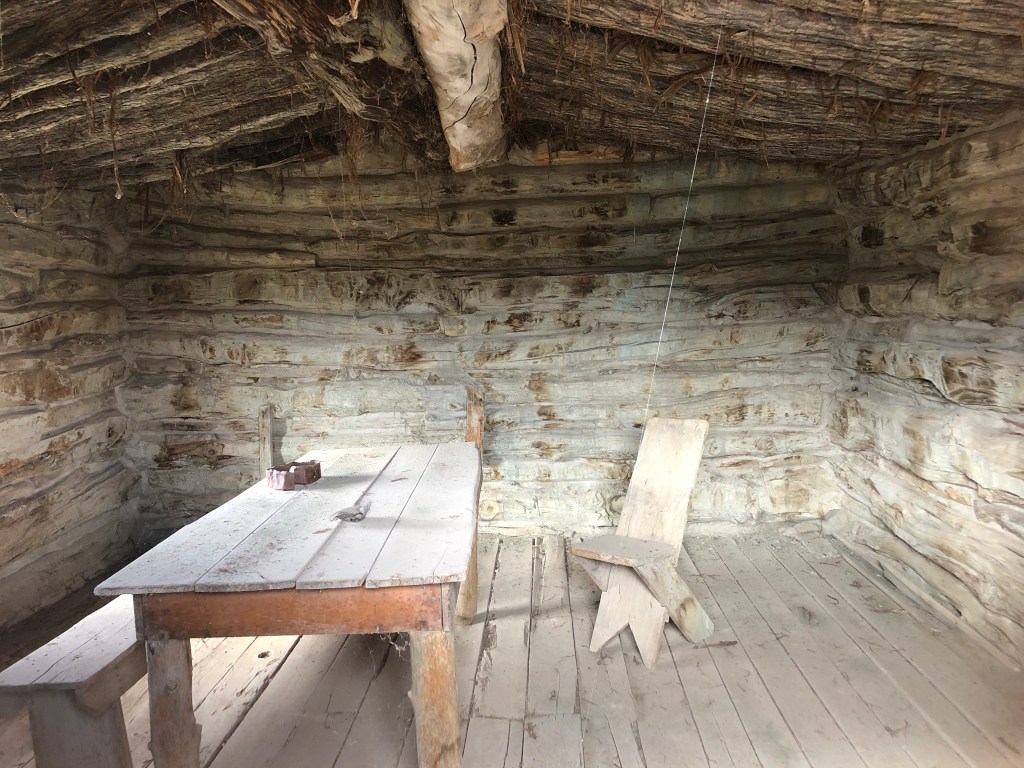
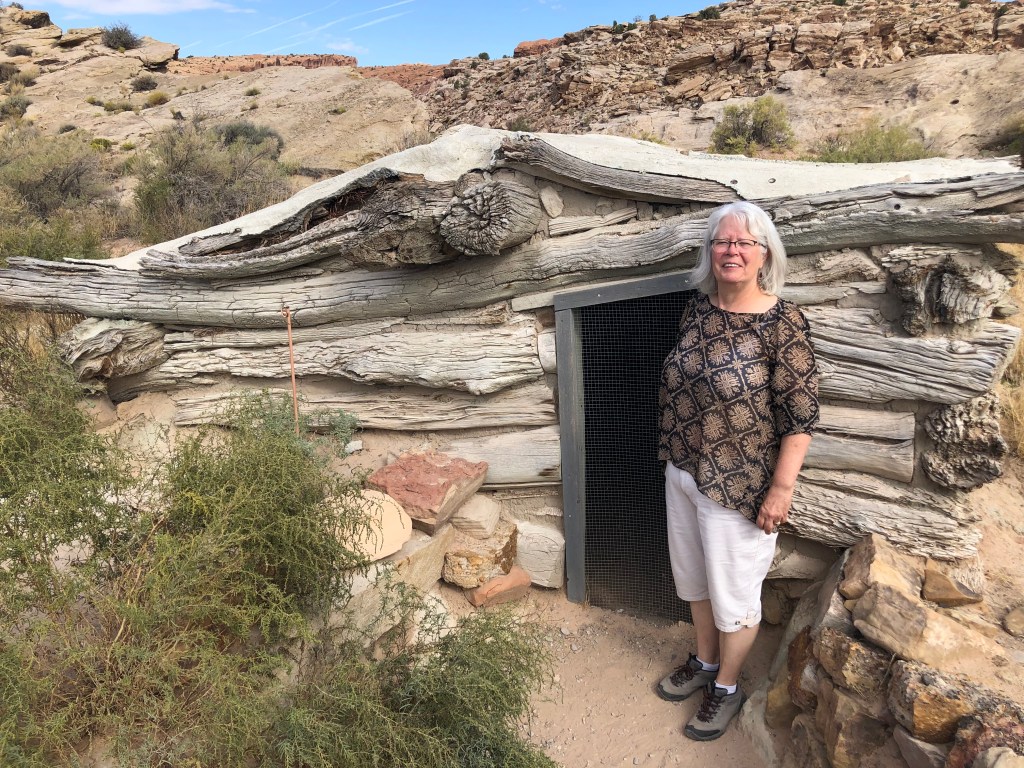
Within Arches park is Wolfe Ranch. In late 1800’s John Wolfe moved from Ohio to the west with his son Fred. John had suffered an injury to his leg while serving in the Civil War. Ohio weather wasn’t kind to that injury and the dry desert air made life so much easier for him. However, his wife would not go with him as she thought the wild west was no place to raise her children. The original house had a dirt floor and John also built a cold cellar. His daughter, Esther and husband joined John and Fred in the early 1900’s and she talked John into building a house with a wooden floor. The cellar and second house still stand and there are remnants of an old corral that reminds me of David Allen’s fence along our Hummingbird Lane. The homestead is beside a little stream that John used to water the few animals he had. He made a decent living there in the desert.
Moab is the closest town. It is a tourist town nestled in the valley below Arches park. Both sides of the main street are lined with souvenir shops, restaurants, and cafes. We wandered around after having lunch at Bonjour Café, whose owner was very friendly, but as French as my kitchen table! Cell service and amenities can be scarce sometimes in the desert. So we loaded up with supplies in anticipation of the next while.
The landscape changed as we headed west towards Monument Valley, from harsh rock to rolling hills and rough scrubby pastureland. A lot of the desert is open range territory, but we didn’t see many livestock – actually we didn’t see much evidence of life. We wanted to visit Hovenweep National Monument on the border of Utah and Colorado. About 30 miles on the road to the site the pavement ended and a washboard gravel road made it easy to make the decision to turn around. Hovenweep was home to about 2500 Puebloan people around the 1200’s. Some structures are still standing, and the ruins show skill and creative beauty. By the end of the 1300’s the inhabitants were forced to leave possibly because of drought, factionism and warfare. They migrated south to the Rio Grande Valley in New Mexico and the Little Colorado River Basin in Arizona.
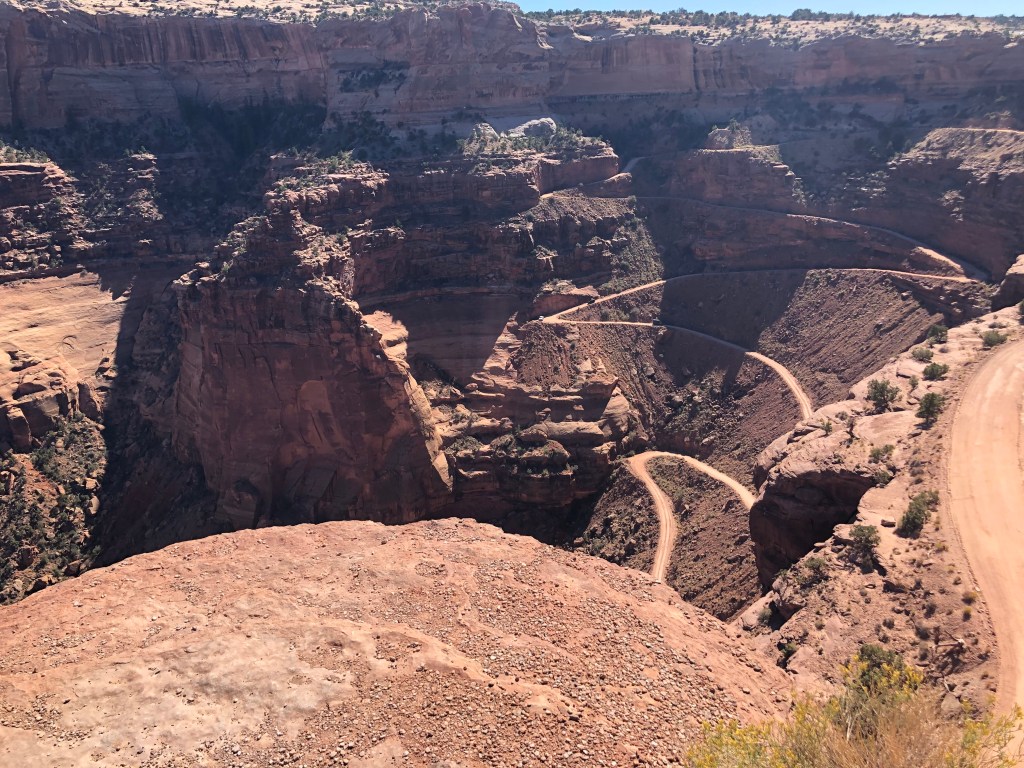
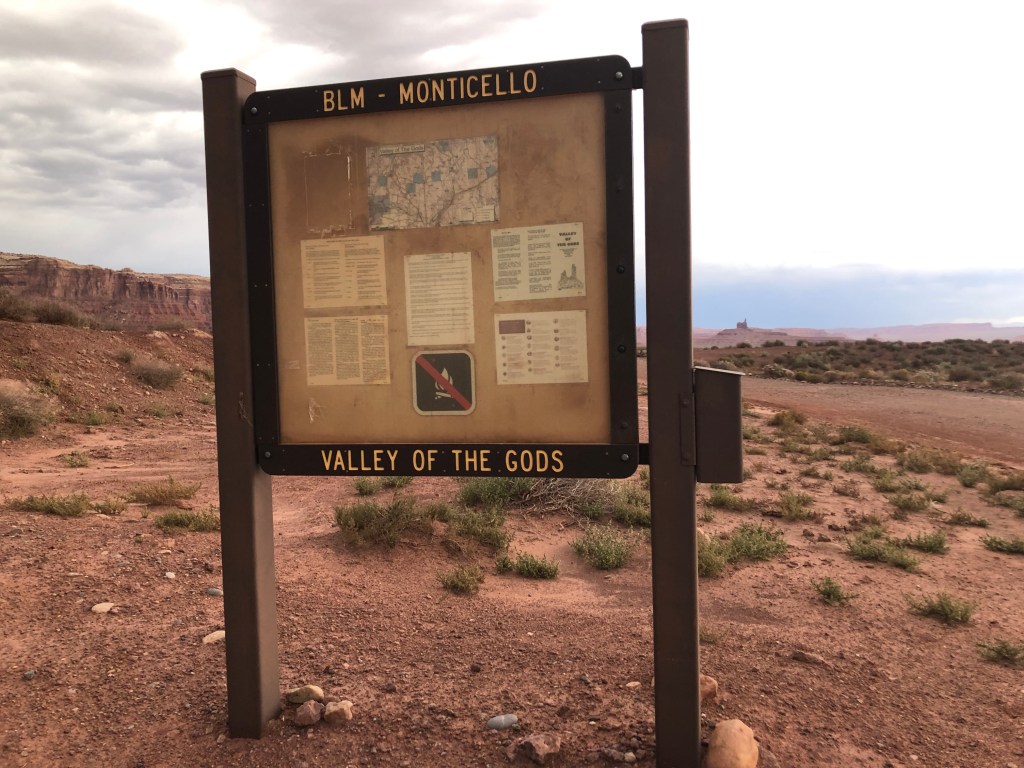
So we carried on to The Valley of the gods. We camped at the entrance because we got there later in the afternoon. A thunderstorm was brewing and when it came over the mountain it rocked the RV a good part of the night. The plan was to find a campsite the next day. However, the road into the campground had been battered by recent heavy rains making the road difficult for the RV to get through. We have been to the Valley of the gods three times in our travels without being able to drive through it. Valley of the gods 3, Campbells 0! The Valley of the gods sits at the corner of hwys 163 and 261. Moki Dugway is part of Hwy 261 over Cedar Mesa that rises 1000 ft and overlooks the Valley. Moki Dugway is a 2.2 mile gravel road carved into the side of the mesa with 11% grades and switchbacks not suitable for RVs, transport trucks or vehicles pulling trailers (we witnessed RVs and travel trailers drive on it, but we didn’t). It was created in the 1950’s during the uranium boom by Texas Zinc Minerals for ore trucks carrying uranium and vanadium (a chemical element used for medicinal purposes as well as to make steel alloy) to a Mexican Hat processing mill. I guess it was ok back then for people risk their lives over the Dugway!
That was our adventure for this week. Until next time…

 Let's Do The 180!